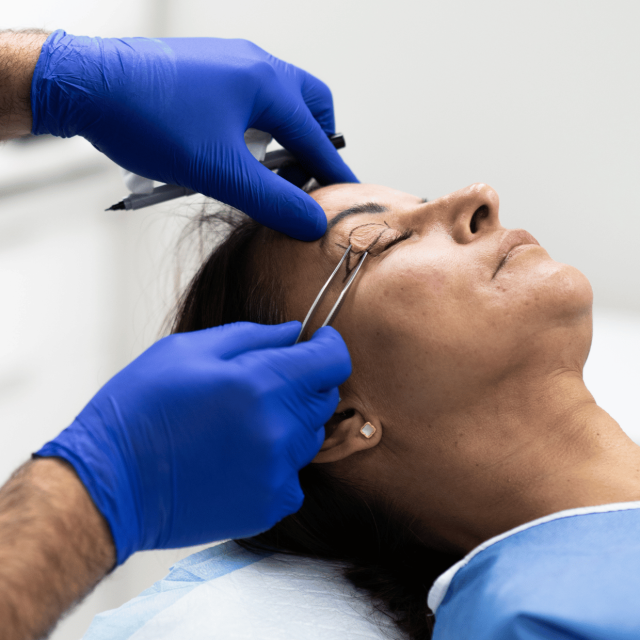
Blepharoplasty, or eyelid surgery, removes excess skin and fat around the eyes. It can address puffiness and drooping eyelids, including skin that affects your vision. At SRGN, we take time to understand your concerns and plan treatment around your needs.

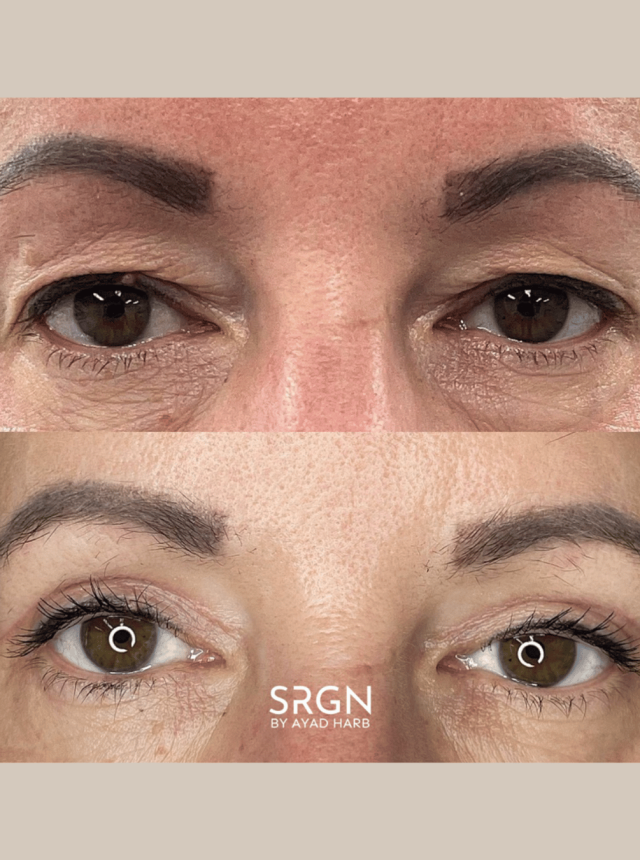




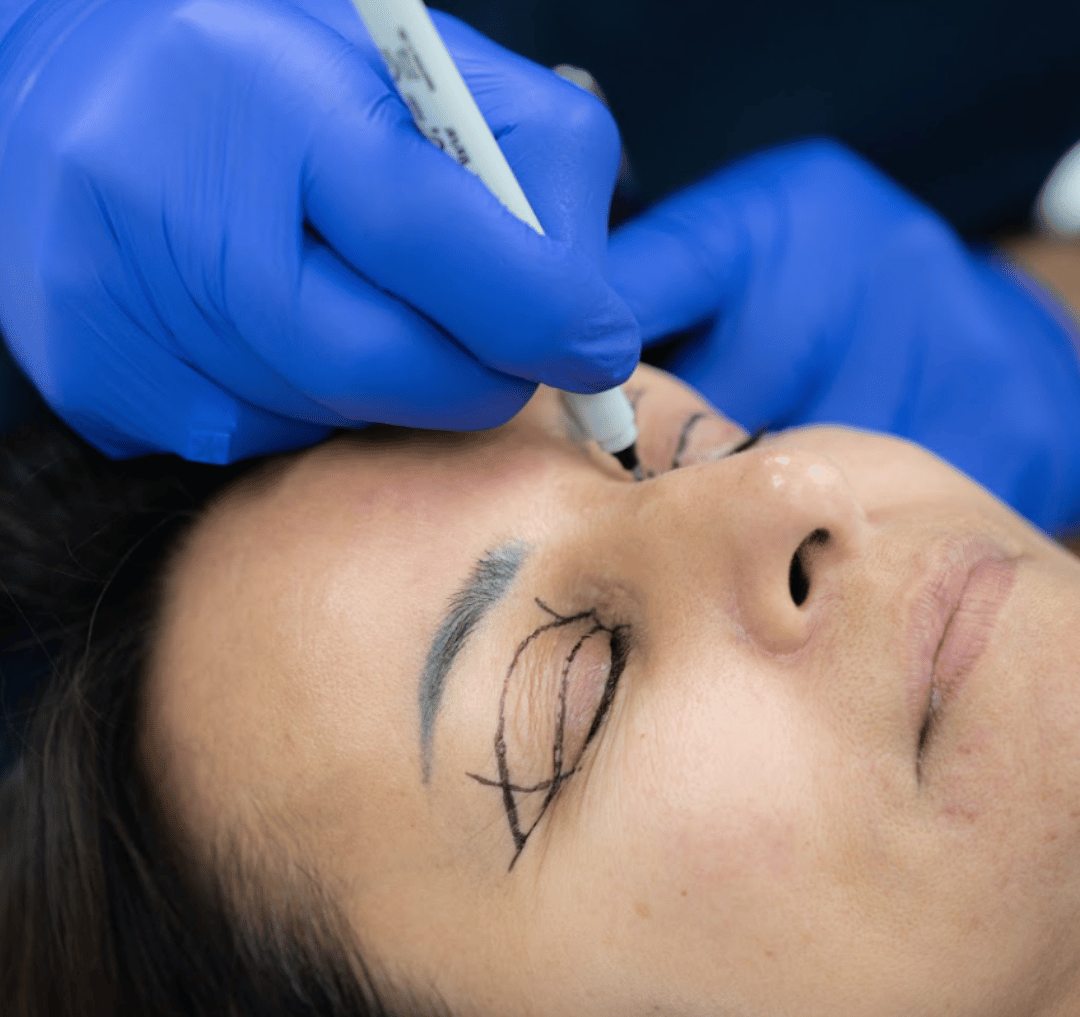
Blepharoplasty treats selected concerns involving excess eyelid skin or prominent fat around the eyes. Upper and lower eyelid surgery address different anatomy. The right approach depends on your eyelid function, eye health and the change you want.
Upper blepharoplasty focuses on the upper eyelids. Lower blepharoplasty addresses selected lower eyelid concerns. Puffiness, dark circles and a tired appearance can have several causes, so surgery is not suitable for every concern.
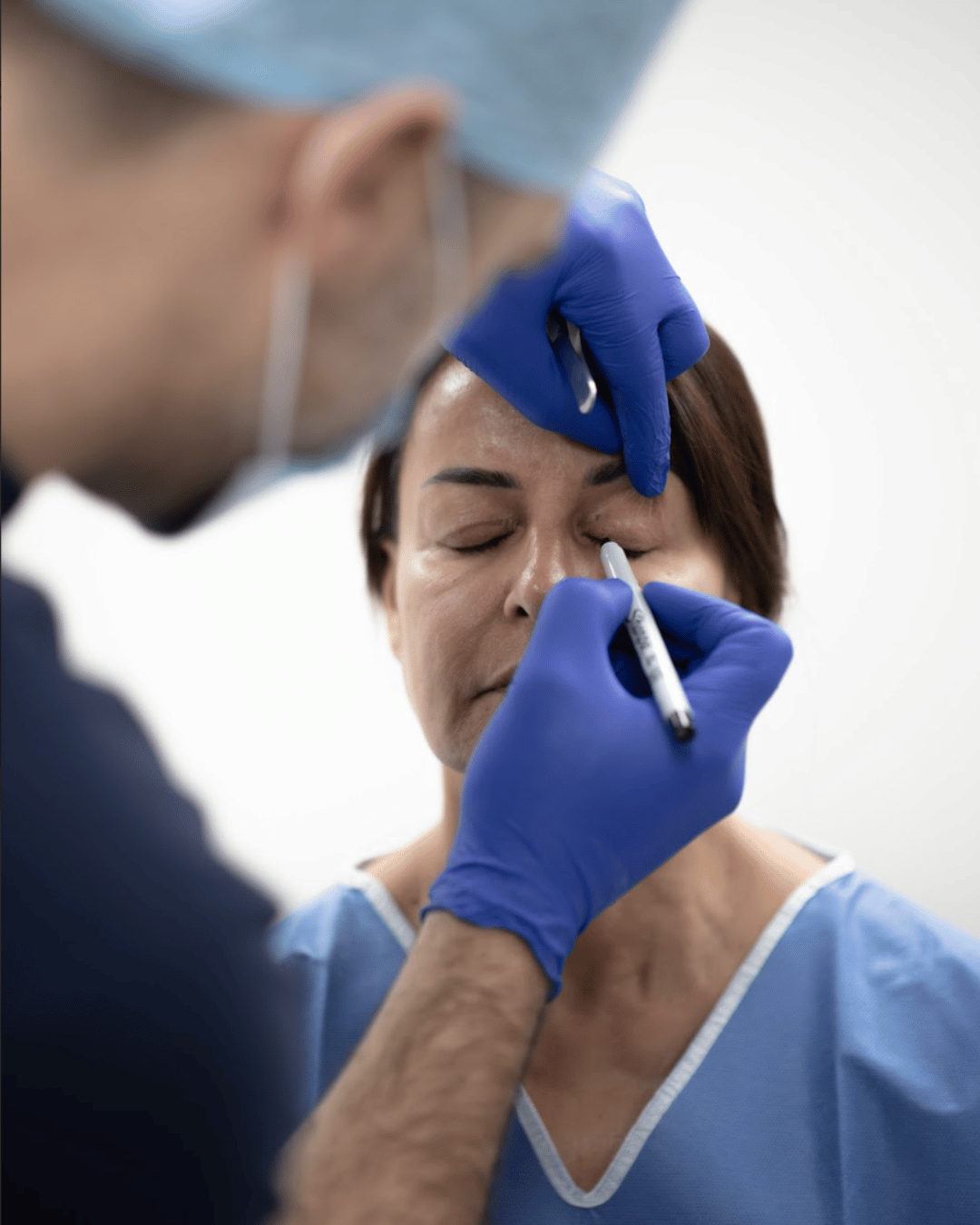
Your surgeon will discuss your goals and assess the eyelids, brow position and medical history. Tell them about dry eyes, previous eye procedures, medication and any vision symptoms. You should understand the proposed operation, anaesthetic, possible outcomes and alternatives before deciding.
SRGN currently lists approximate downtime of one to two weeks. This is a planning guide rather than a guarantee: bruising, swelling and scar changes can take longer to settle. Your surgeon will explain the expected recovery for your operation and give instructions for follow-up care.
Early appearance does not represent the final result. Eyelid surgery also does not stop ageing or guarantee a particular duration of improvement.
Possible complications include infection, bleeding, noticeable scars and asymmetry. Eyelid-specific concerns include dry eyes, difficulty closing the eyes or a change in eyelid position. Serious complications affecting vision are rare but should be discussed as part of informed consent.
Read Dr Ayad Harb’s profile and meet the SRGN team. Confirm which surgeon will assess and operate on you, where the procedure takes place and who provides follow-up care.
Ask for a written quotation specific to upper, lower or combined eyelid surgery. Confirm whether consultation, anaesthesia, follow-up and any additional care are included. A generic treatment price may not describe your complete plan.
Arrange a consultation to discuss suitability and recovery.
Independent information: NHS eyelid surgery guidance.
Anaesthesia is used during surgery, and discomfort may occur afterwards. Ask your surgeon about the anaesthetic plan, pain relief and the recovery expected for your operation.
Results can be lasting, but surgery does not stop ageing or guarantee a particular duration of improvement. Your surgeon will discuss realistic expectations for your anatomy and treatment plan.
Suitability depends on your eyelid anatomy, eye health, medical history and goals. Dry eyes, brow position and previous eye procedures can affect the assessment. Not every concern around the eyes is best treated with surgery.
Swelling and bruising affect the early appearance. The result becomes clearer as healing progresses; your surgeon will explain the expected timescale for your operation.
Surgery leaves scars. Incisions are planned to limit their visibility, but scar appearance and healing vary. Ask your surgeon about the planned incision and expected scar changes.
Other procedures may be appropriate for selected patients. Your surgeon should explain the reason, timing, additional risks and alternatives rather than assuming that a combination is necessary.
Follow your surgeon’s instructions about when makeup, contact lenses and other products can be used again. The timing depends on healing and the operation performed.
There is no official ranking system for blepharoplasty surgeons in the UK. The best surgeon for you will depend on their qualifications, experience performing eyelid surgery, patient outcomes and whether their surgical approach aligns with your goals. Many patients researching blepharoplasty in London choose surgeons with a strong focus on facial surgery and a proven record of natural-looking results.
Both can perform blepharoplasty. The most important factor is the surgeon's experience with eyelid procedures and facial anatomy rather than their title alone.
Look for a surgeon who is fully registered, performs eyelid surgery regularly, provides detailed consultations and can demonstrate consistent, natural-looking results.
Patients should ensure their surgeon is registered with the General Medical Council and ideally listed on the specialist register relevant to their surgical discipline.
London is home to many highly experienced facial plastic surgeons, oculoplastic surgeons and specialist clinics, giving patients access to a wide range of expertise and treatment options.
Dr Ayad Harb is a facial plastic surgeon with extensive experience in facial rejuvenation procedures. His approach to blepharoplasty focuses on restoring a refreshed appearance while preserving natural facial characteristics. Patients often seek his expertise for upper eyelid surgery, lower eyelid surgery and correction of tired-looking eyes caused by excess skin or prominent eye bags.
Talk about the changes you would like to make and ask about the surgeon’s experience, treatment options, expected results and patient safety. Your consultation should help you understand the proposed plan and decide whether it feels right for you.
