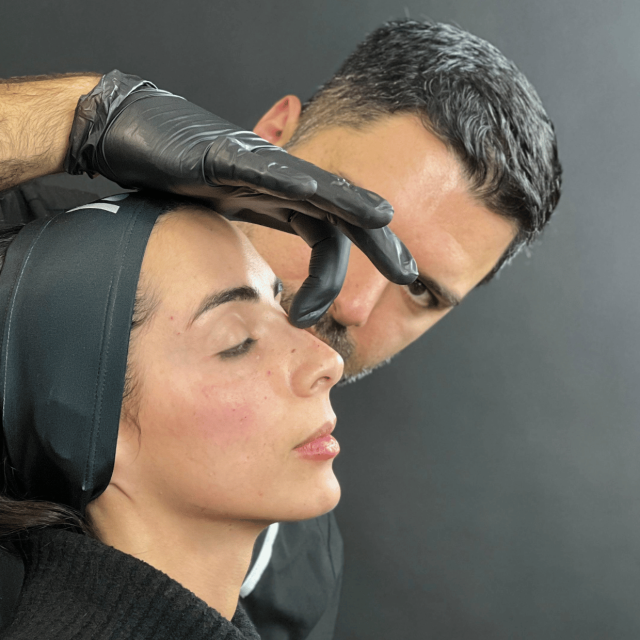
If you have concerns about your nose after surgery, we offer assessment for non-surgical rhinoplasty. Our team can discuss your previous treatment, the changes you would like and what may be possible.
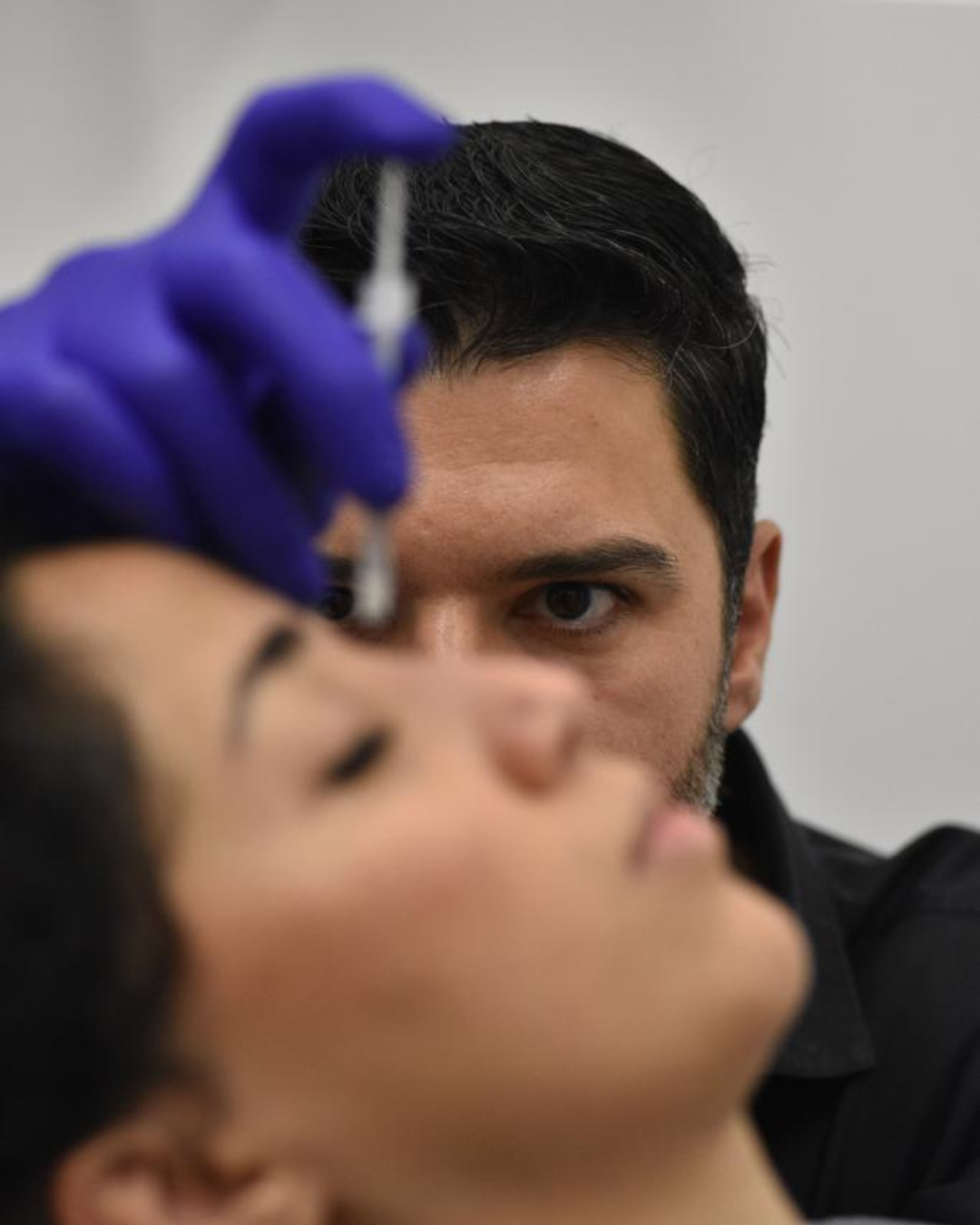
Post-surgical nose correction is often sought by individuals who have previously undergone rhinoplasty but are dissatisfied with their results. This dissatisfaction may stem from issues such as asymmetry, unwanted bumps, breathing difficulties, or simply a desire for further refinement. These concerns can arise from changes that occur during the healing process, the natural ageing of the face, or a need for additional adjustments to achieve the desired aesthetic.
Dr Ayad Harb, a world-renowned plastic surgeon and pioneer on non-surgical rhinoplasties, understands the intricacies involved in revision rhinoplasty. With a keen eye for detail and a commitment to excellence, Dr Harb offers tailored solutions that address each patient’s unique concerns, ensuring a natural, harmonious result that enhances both function and appearance.
After an initial rhinoplasty, some patients may notice slight asymmetry or irregularities. These can be corrected with surgical revision or non-surgical rhinoplasty using dermal fillers to smooth and refine the nose’s shape.
Functional issues like breathing difficulties can occur after rhinoplasty. These issues are addressed through surgical correction to restore proper nasal function while maintaining the aesthetic improvements.
Small bumps or imperfections may remain or develop after surgery. These can be treated with non-surgical rhinoplasty using dermal fillers, offering a non-invasive way to achieve a smoother contour.
Non-surgical rhinoplasty uses dermal fillers to adjust the appearance of the nose. Dr Ayad Harb has experience treating more than 12,000 noses and uses his 3-Point Rhino technique to plan treatment around your features.
If you have had nose surgery before, your consultation will include a review of your treatment history and the changes you would like. Dr Harb will explain whether filler treatment may be suitable and what it may achieve.
