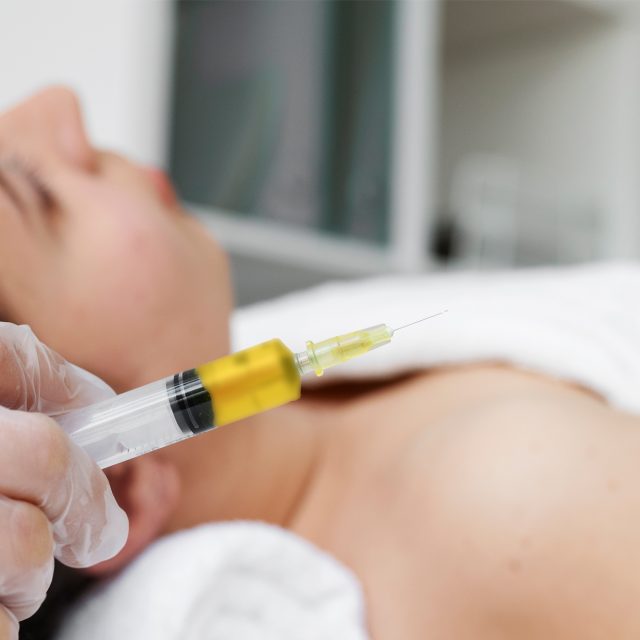
Fat transfer to the face restores lost volume using your own purified fat, creating natural, long-lasting rejuvenation. By addressing structural volume loss rather than simply filling lines, it offers a softer, more integrated result that evolves naturally with you.
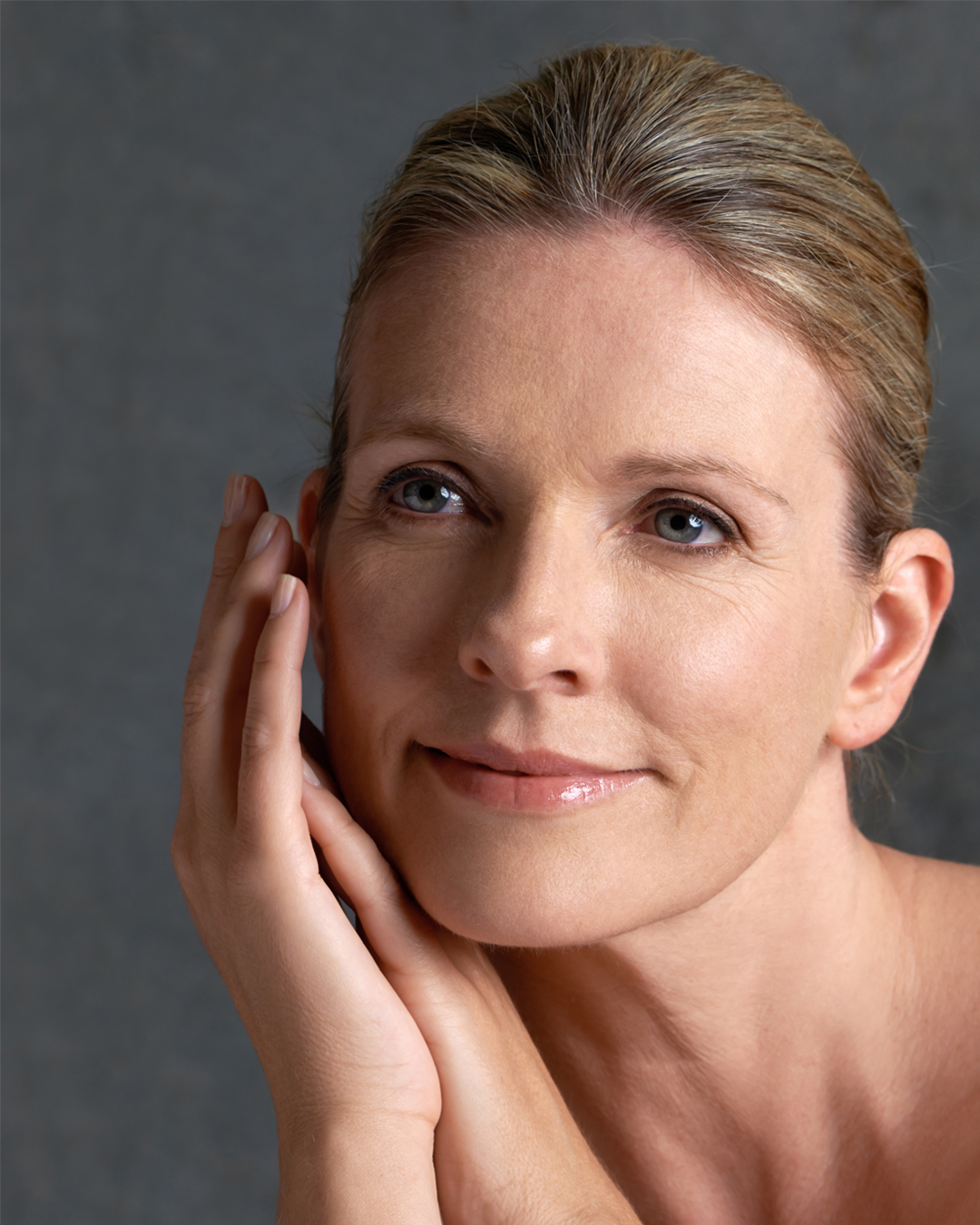
Facial fat transfer, also known as facial fat grafting, is a surgical procedure designed to restore lost volume using your own body fat. Rather than relying on synthetic dermal fillers, this technique uses purified fat taken from areas such as the abdomen or thighs and carefully reinjected into the face to create natural, long-lasting rejuvenation.
As we age, facial fat pads diminish and shift. The result is hollow cheeks, under-eye shadows, deeper nasolabial folds and a loss of soft definition along the jawline. Fat transfer to the face addresses the structural cause of ageing rather than simply filling lines. The outcome is typically softer, more natural, and longer-lasting than many injectable alternatives.
Facial fat transfer is a two-stage procedure:
Because the material used is your own living tissue, the risk of allergic reaction is extremely low. Once the transferred fat establishes a blood supply, it behaves like natural facial fat.
This makes fat grafting particularly suitable for patients who want subtle yet meaningful volume restoration without looking “overfilled”.
Fat transfer can restore volume in multiple facial regions, including:
In many cases, several areas are treated during the same procedure to maintain facial harmony.

Facial fat transfer is typically suited to individuals who:
It is particularly popular with patients in their late 30s to 60s seeking structural rejuvenation rather than surface-level correction.
A detailed consultation with Dr Ayad Harb is essential to assess facial anatomy, skin quality and suitability.
Patients often compare fat transfer to dermal fillers. While both restore volume, there are important differences.
The right option depends on your goals, tolerance for downtime and desired longevity.
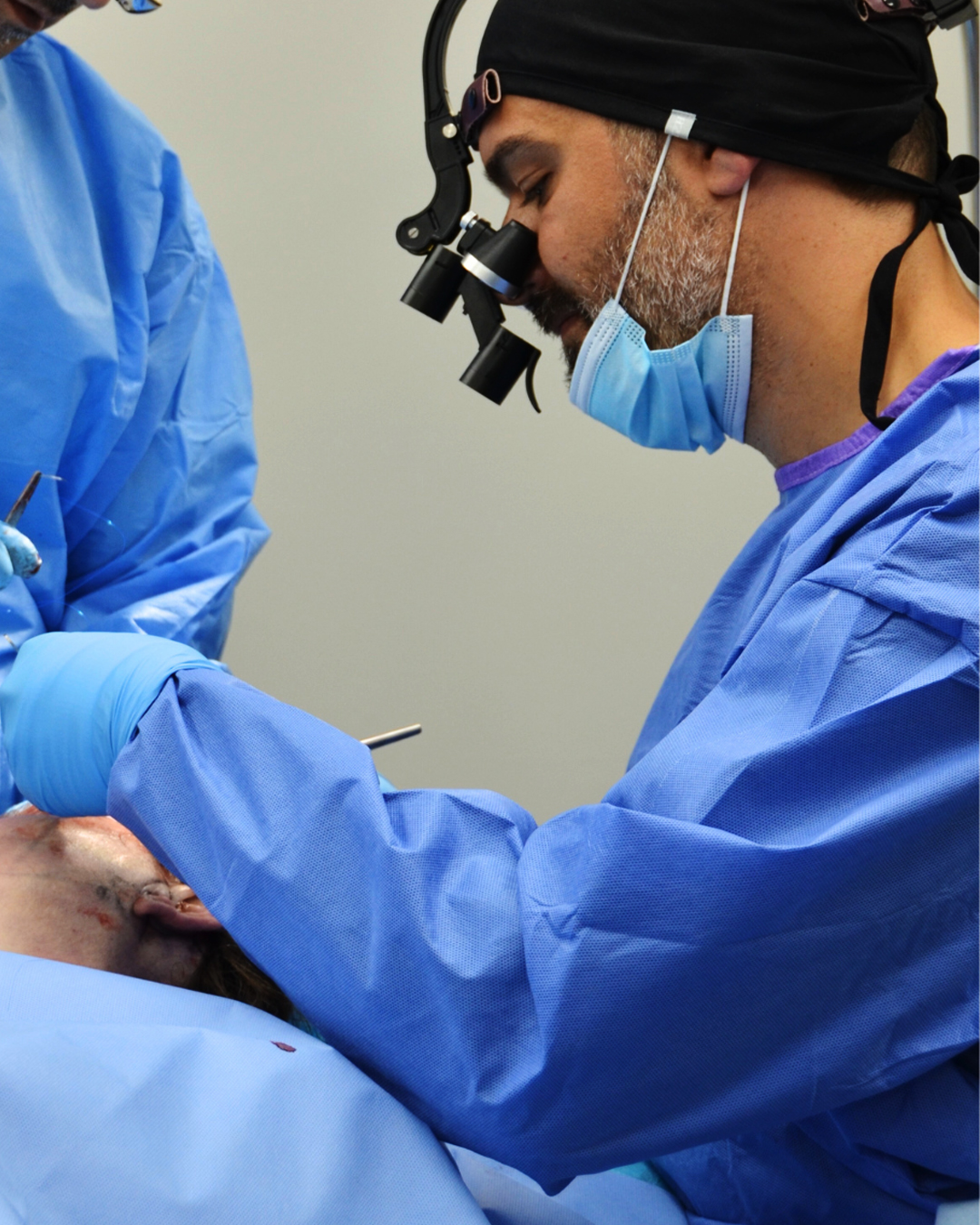
Facial fat grafting is usually performed under local anaesthesia with sedation. The harvested fat is carefully processed before being injected in small, precise amounts. This meticulous technique improves fat survival and ensures smooth, natural contours.
The procedure typically takes between one and three hours, depending on how many areas are treated.
Recovery varies, but most patients experience:
Some of the transferred fat will naturally be reabsorbed by the body within the first few months. Dr Ayad usually account for this by slightly overfilling the area initially.
Most people return to social activities within 10–14 days, although subtle swelling can persist for several weeks.
As with any surgical procedure, facial fat grafting carries potential risks. These may include:
Choosing an experienced, medically qualified surgeon with a detailed understanding of facial anatomy significantly reduces these risks.
A thorough consultation with our surgeon, realistic expectations and careful surgical planning are essential for optimal outcomes.
One of the main advantages of fat transfer to the face is longevity. Once the fat cells successfully integrate, they behave like normal fat cells and can remain for many years.
Ageing continues naturally, but the restored volume provides a more youthful facial structure that does not rely on repeated filler appointments.
Results develop gradually as swelling settles, with final outcomes typically visible after three to six months.
Fat injections in the face are considered long-lasting. In the first three months, a proportion of the transferred fat is naturally reabsorbed by the body. The remaining fat cells establish a blood supply and can survive for many years. While the procedure does not stop the ageing process, the restored volume typically remains stable long term, making facial fat transfer a more durable alternative to temporary fillers.
Yes, facial fat injections are clinically proven to restore lost volume and improve facial contours when performed by an experienced surgeon. The key to successful results lies in careful harvesting, purification and precise placement of the fat. Because your own tissue is used, the outcome often looks softer and more natural than synthetic fillers. Results depend on surgical technique, individual healing response and realistic expectations.
There is no single procedure that universally “takes 10 years off”, as ageing affects skin, fat, muscle and bone differently in each person. However, treatments that restore structural volume, such as facial fat transfer, can create a noticeably more youthful appearance. In some cases, fat grafting may be combined with eyelid surgery, a facelift or skin resurfacing to achieve more comprehensive rejuvenation. The most effective approach is always tailored to individual anatomy and concerns.
Yes, fat can be safely injected into the face through a procedure known as facial fat transfer or fat grafting. Fat is taken from another area of the body using liposuction, processed, and then carefully reinjected into areas of volume loss such as the cheeks, temples or under the eyes. Because the material used is your own tissue, the risk of allergic reaction is extremely low. Suitability is determined following a detailed medical assessment.
There is no specific “best” age for facial fat transfer. The procedure is generally most suitable for individuals experiencing visible volume loss, which often becomes more noticeable from the late thirties onwards. Some patients seek treatment earlier due to genetics or significant weight loss. Rather than age alone, candidacy depends on facial anatomy, skin quality, overall health and treatment goals. A personalised consultation is essential to determine timing and suitability.
While facial fat transfer offers natural and long-lasting results, it is still a surgical procedure and therefore comes with considerations. Recovery is longer than with dermal fillers, as both the donor area and the face may experience swelling and bruising for one to two weeks. Not all transferred fat survives, meaning a small proportion is naturally reabsorbed by the body in the first few months. Results can also vary depending on individual healing response and surgical technique. As with any procedure, there are risks such as asymmetry, irregular contour or infection, although these are uncommon when performed by an experienced, medically qualified surgeon.