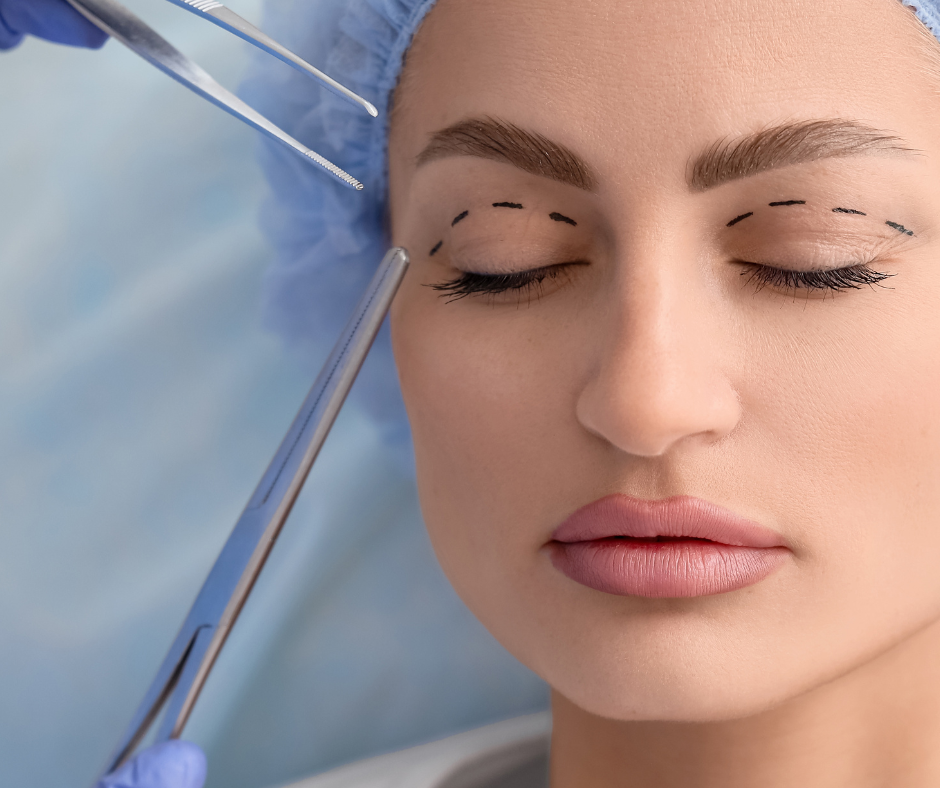
If you’re considering eyelid surgery, it’s natural to wonder, what does healing feel like after blepharoplasty? Recovery is usually very manageable, but the sensations can vary day by day. Dr Ayad explains that most people are pleasantly surprised by how mild the discomfort is, especially compared to how delicate the eye area looks immediately after surgery.
In the first 24 to 72 hours, healing typically feels like tightness, mild soreness, and swelling around the eyes rather than sharp pain. Many patients describe a sensation similar to tired or strained eyes. Bruising and puffiness are common, and the eyelids may feel slightly heavy or stiff as the tissues begin to settle. Cooling compresses and keeping the head elevated usually provide noticeable relief during this phase.
Some people also experience watery eyes, dryness, or light sensitivity, particularly in the early days. These sensations are temporary and improve as swelling reduces and the eyelids regain normal movement.
As the days pass, swelling and bruising gradually fade, often changing colour before disappearing completely. Tightness around the incision sites is normal and can last for one to two weeks. During this time, the eyelids may feel firm or slightly numb, a sign that nerves and tissues are healing.
Most people feel comfortable enough to return to daily activities within 7 to 10 days, although the eye area may still look slightly swollen. By the end of the second week, the eyelids usually feel far more natural, with only minimal residual tenderness.
Over the following weeks, healing becomes less noticeable. Any remaining tightness softens, scars continue to fade, and eyelid movement feels completely normal again. Some patients report occasional mild sensitivity or dryness during this stage, but this steadily improves. Full internal healing continues for several months, even though the eyes may already look refreshed and well-rested.
Blepharoplasty recovery should not involve severe pain, intense pressure, or worsening vision. Increasing redness, sharp pain, or sudden changes in eyesight are not typical and should always be assessed promptly. When aftercare instructions are followed and healing progresses normally, recovery remains smooth and predictable.
For most people, healing feels tight, mildly sore, and temporarily swollen, rather than painful. Each day brings noticeable improvement, with the eyes feeling more comfortable and natural as healing progresses. While patience is required in the early stages, recovery from blepharoplasty is generally straightforward, and the refreshed, lighter eye area that follows often makes the process feel well worth it.
Most people find their eyes begin to feel more comfortable within 7 to 10 days after blepharoplasty, once the initial swelling and tightness have settled. By around two weeks, eyelid movement usually feels much more natural, although subtle tightness or sensitivity can persist for several more weeks as healing continues internally. Full healing takes a few months, but for most patients, the eyes feel “normal” again well before that point.
Recovery from blepharoplasty is usually not painful. Discomfort is more commonly described as tightness, soreness, or a heavy sensation, rather than sharp pain. Mild irritation, dryness, or watery eyes are normal in the early days and are easily managed with prescribed eye ointments and cold compresses. Strong pain is uncommon and should always be assessed if it occurs.
To support faster healing after upper blepharoplasty, it’s important to rest the eyes, keep the head elevated, and use cool compresses in the first few days to reduce swelling. Following aftercare instructions closely, avoiding strenuous activity, limiting screen time, and protecting the eyes from sun and wind all help the tissues heal smoothly. Keeping the incision area clean and well-lubricated with recommended ointments also reduces irritation and supports optimal recovery.
