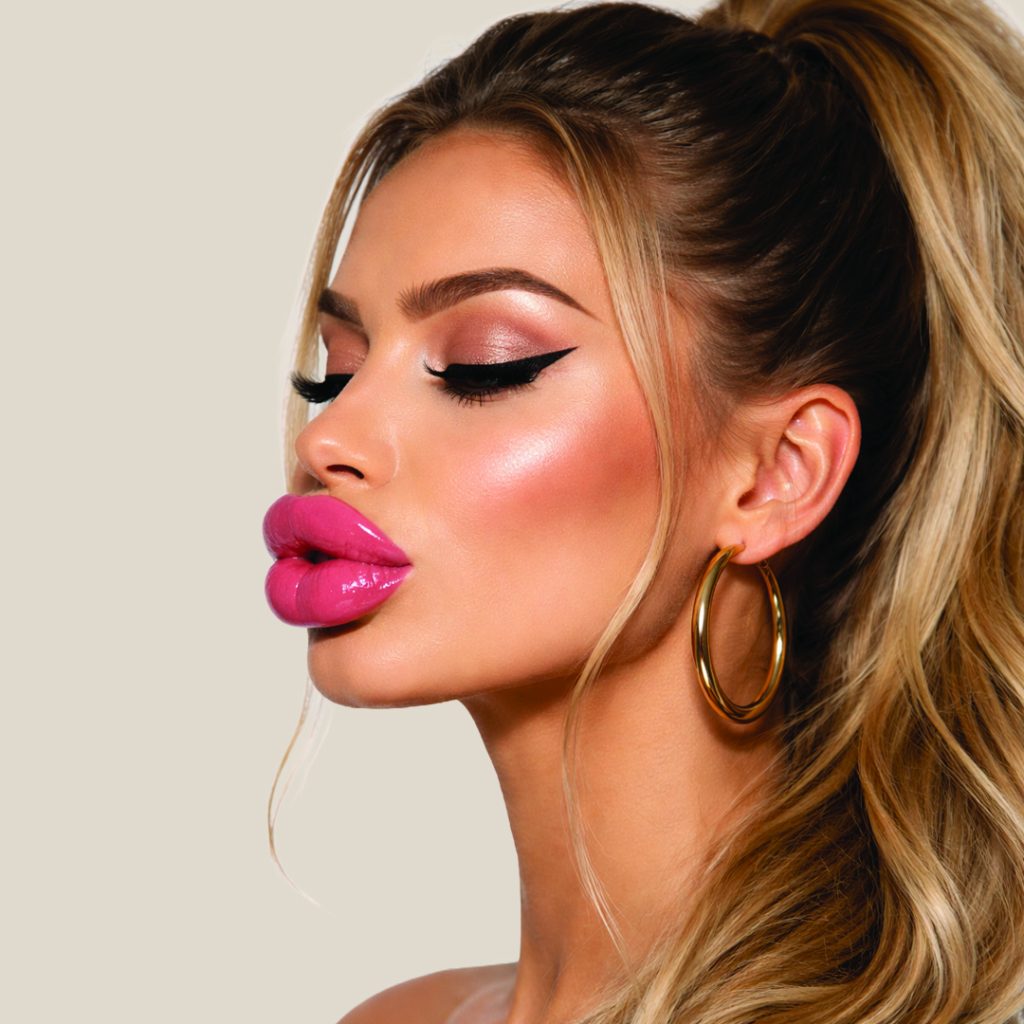
Lip enhancement is one of the most popular aesthetic treatments, yet it’s also one of the most noticeable when something doesn’t look quite right. While well-executed results can be subtle and harmonious, others can appear overfilled, uneven, or disproportionate. This often leads to the question: Why do some lips look unnatural?
The answer usually lies not in the treatment itself, but in how it is planned and performed.
Our aesthetic practitioner, Mo Harb, says that the lips play a central role in facial balance. Their shape, size, and projection should complement the surrounding features rather than dominate them. Natural lips typically follow certain proportions, with the lower lip slightly fuller than the upper lip and a defined but not exaggerated cupid’s bow.
When these proportions are altered too aggressively, the lips can begin to look artificial or out of balance with the rest of the face.
When asking why some lips look unnatural, Mo says the most common reason is overfilling. Adding too much volume, particularly in a single session, can stretch the tissue and create a swollen or heavy appearance.
Another factor is incorrect placement. If lip filler is injected too close to the surface or outside the natural lip border, it can lead to migration, creating a “shelf” above the lip or a blurred outline. This is often what gives the appearance sometimes described as “duck lips.”
In some cases, repeated treatments over time can gradually distort the natural lip structure, especially if previous filler has not fully dissolved before additional product is added.
Achieving natural-looking lips requires more than simply adding volume. It involves understanding the anatomy of the lips, the movement of the mouth, and how light reflects across the surface.
Subtle placement, product layering, and choosing the right type of dermal filler all contribute to a softer, more natural result. The goal is often to enhance shape, improve hydration, and restore balance rather than dramatically increase size.
One of the key principles in lip enhancement is restraint. Gradual treatments, spaced over time, allow the lips to adjust and maintain their natural movement and appearance. This approach reduces the risk of overcorrection and helps preserve the integrity of the tissue.
Patients who prioritise subtle changes tend to achieve results that are less detectable and more aligned with their natural features.
Understanding why do some lips look unnatural highlights the importance of balance in aesthetic treatments. Lips that appear natural are those that integrate seamlessly with the face, enhancing expression rather than distracting from it.
With the right approach, lip enhancement can refine and soften the appearance without compromising authenticity, creating results that look like a natural extension of the individual, rather than a visible alteration.
Lip filler can appear unnatural when too much volume is added or when it is placed incorrectly. Overfilling, especially in a single session, can distort the natural lip shape and proportions. Superficial placement or product migration may also create uneven texture or a blurred lip border. Natural results depend on careful technique, gradual enhancement, and maintaining harmony with the rest of the face.
Perception of attractiveness is subjective, but lips may appear less balanced when proportions are exaggerated or asymmetrical. Overly projected upper lips, uneven volume, or a lack of definition can disrupt facial harmony. In aesthetic practice, the focus is not on achieving a specific lip type, but on enhancing natural features in a way that complements the individual’s overall facial structure.
People with scleroderma may be able to have lip fillers, but it requires careful medical assessment. The condition can affect skin thickness, healing, and blood flow, which may increase the risk of complications. Any treatment should be approached cautiously and carried out by a medically experienced practitioner who understands the condition and can determine whether it is safe and appropriate.
