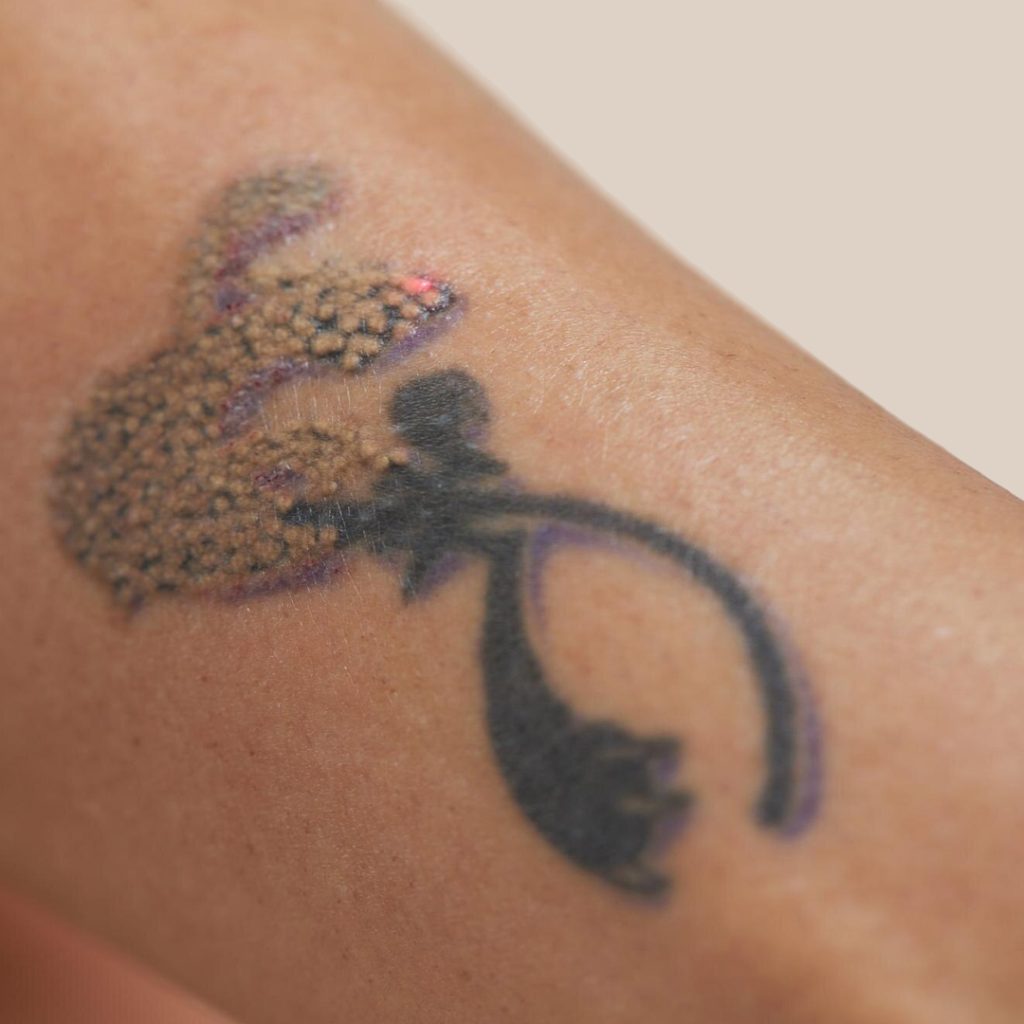
Tattoo removal has become one of the most requested laser procedures in aesthetic medicine. Yet many people are curious about what actually happens beneath the skin during treatment. A common question is: why does tattoo ink break apart under a laser? The answer lies in how modern laser technology interacts with pigment particles embedded in the skin.
Understanding this process helps explain why laser tattoo removal works so effectively, and why multiple sessions are usually needed.
When a tattoo is applied, pigment is injected into the dermis, the layer of skin beneath the surface. The ink particles are relatively large, which prevents the body from removing them naturally. This is why tattoos are designed to be permanent.
The immune system does attempt to break down the ink over time, but the pigment particles are simply too large to be carried away efficiently. Laser technology works by changing this.
Modern laser tattoo removal treatments use extremely fast pulses of laser energy, particularly with pico laser technology. These pulses are delivered in trillionths of a second and create a photoacoustic effect within the pigment.
Instead of slowly heating the ink, the laser sends powerful bursts of energy that cause the pigment particles to vibrate and shatter into much smaller fragments. This is why tattoo ink appears to break apart during treatment.
Once the particles are fragmented, the body can gradually remove them through the lymphatic system. Over time, the tattoo fades as the immune system clears away the broken pigment.
This explains why tattoo ink breaks apart under a laser rather than simply disappearing immediately after treatment.
Even though laser technology is powerful, the body still needs time to process and eliminate the fragmented ink particles. Each treatment breaks down more pigment, but the immune system must then clear it away before the next session.
Several factors influence how quickly a tattoo fades, including the colour of the ink, the depth of the tattoo, the location on the body, and how well the immune system responds.
Darker inks, such as black, tend to respond more quickly because they absorb laser energy more effectively, while certain colours may require more sessions to achieve the same level of fading.
One reason pico lasers have become the preferred approach for tattoo removal is their ability to shatter pigment into extremely fine particles. Because the pulses are so fast, they create more of a mechanical disruption than heat damage, allowing efficient pigment breakdown while minimising unnecessary trauma to surrounding skin.
For those wondering why tattoo ink breaks apart under a laser, the answer lies in this precise interaction between light energy and pigment particles. By transforming large ink fragments into microscopic debris, the laser allows the body to do what it could never do before: gradually erase the tattoo from within.
When tattoo ink is treated with a laser, the energy breaks the pigment into much smaller particles within the skin. These fragments are then gradually removed by the body’s immune system through the lymphatic system. Over several weeks, the broken pigment is carried away naturally, which causes the tattoo to fade progressively after each treatment session.
People with autoimmune conditions can sometimes get tattoos, but it depends on the specific condition and how well it is controlled. Because autoimmune diseases affect the immune system and healing response, there may be a higher risk of inflammation, infection, or delayed healing. Anyone with an autoimmune condition should consult a medical professional before getting a tattoo or undergoing tattoo removal.
Certain tattoo colours can be more difficult or unpredictable to treat with laser removal. Lighter colours such as yellow, white, and pastel pigments are often the most challenging because they reflect laser energy rather than absorb it. Some pigments may also contain metallic compounds that react differently under laser treatment, which is why experienced assessment is important before starting removal.
