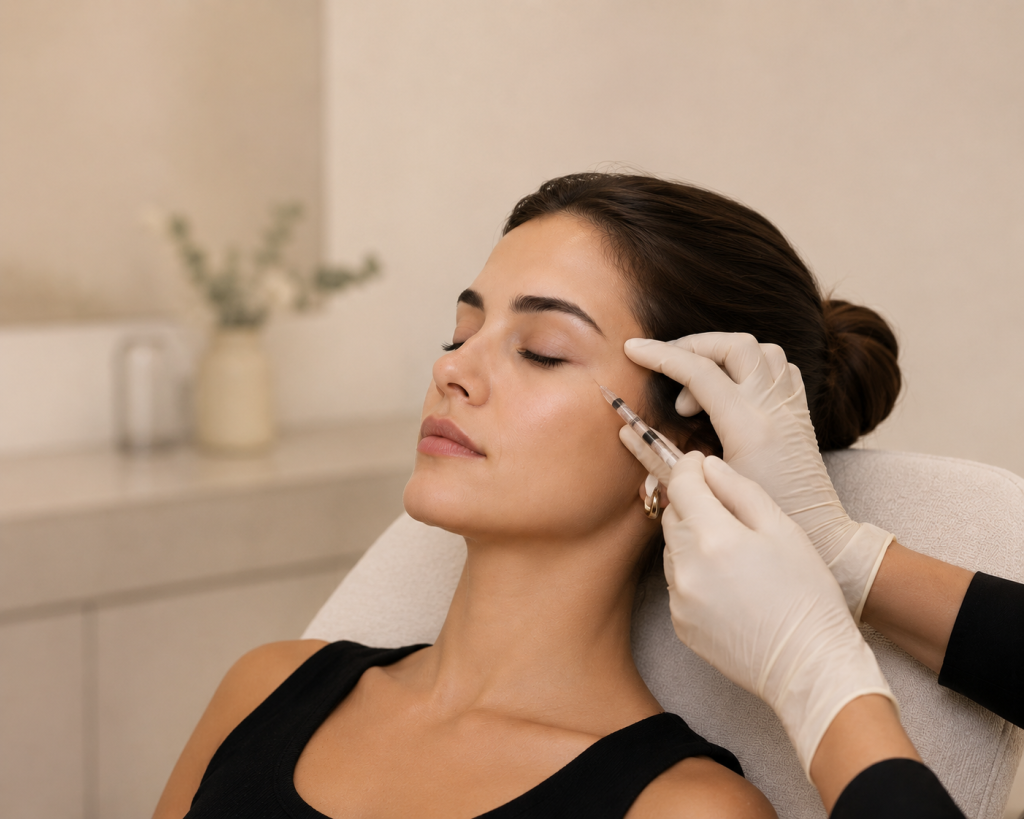
Planning aesthetic treatments around a holiday or business trip can raise several practical questions. One of the most common is: can I have anti-wrinkle injections before flying?
In most cases, flying after anti-wrinkle injections is not considered a problem. Cabin pressure is not known to stop the treatment from working or cause the product to move around the face. However, timing still matters, particularly if you are travelling for an important event or want any temporary side effects to settle before you leave.
Yes, most people can fly after having anti-wrinkle injections. There is no established evidence that normal cabin pressure interferes with the treatment or changes the final result.
However, having treatment immediately before heading to the airport may not always be the most comfortable or practical choice. The treated area can occasionally develop temporary redness, small bumps, tenderness, swelling, or bruising around the injection points.
Allowing some time between treatment and travel can make the journey more comfortable and give the skin time to settle.
A common concern is that changes in cabin pressure could cause the injected product to migrate. This is not how anti-wrinkle injections work.
The treatment is placed into specific muscles using very small amounts of product. Normal air travel is not expected to push the treatment into another area of the face.
The more relevant consideration immediately after treatment is following the aftercare advice provided by your practitioner.
Although anti-wrinkle injections begin working gradually, the full effect is not immediate. Most people start to notice changes within the first several days, with the result continuing to develop afterwards.
For this reason, it is usually better not to schedule treatment immediately before a holiday, wedding, or important event. Leaving enough time allows the result to develop and any temporary bruising or swelling to settle.
It also provides time for a review if one is recommended as part of your treatment plan.
After anti-wrinkle injections, patients are generally advised to follow the specific aftercare instructions provided by their practitioner.
This may include avoiding rubbing or massaging the treated area and postponing strenuous exercise or activities that could increase swelling for a short period after treatment. Advice can vary depending on the areas treated and the individual’s medical history.
The most important point is that travel itself is usually not the main concern. It is how you plan the treatment around the journey and whether you can follow your aftercare properly.
Long-haul flying does not usually affect the action of anti-wrinkle injections. However, long journeys can contribute to dehydration, tiredness, and facial puffiness, which may temporarily affect how the face looks.
If possible, having treatment before a long-haul journey with enough time for any initial redness or bruising to settle may be more comfortable than travelling immediately after an appointment.
Some people consider having injectable treatments while on holiday. However, follow-up care should be part of the decision.
If you experience a concern or need a review, it is usually easier to return to the practitioner who performed the treatment when you are still in the same country. Choosing a qualified practitioner and ensuring appropriate aftercare and follow-up are more important than fitting treatment into a travel itinerary.
Understanding can I have anti-wrinkle injections before flying can make planning much simpler. For most people, flying does not interfere with the treatment itself, and normal cabin pressure is not expected to affect the result.
However, allowing time before a holiday gives the treatment a chance to develop, allows temporary side effects to settle, and makes it easier to access follow-up care if needed.
If you are planning treatment before travelling, the best timing depends on your departure date, the areas being treated, and whether you have an important event during your trip.
For most people, it is considered safe to fly after anti-wrinkle injections. Normal cabin pressure is not known to affect how the treatment works or cause the injected product to move around the face. However, temporary redness, small bumps, tenderness, or bruising can occur after treatment, so allowing some time for the area to settle before travelling may be more comfortable.
In many cases, having dermal fillers a week before flying allows enough time for initial swelling and bruising to begin settling. However, recovery varies depending on the area treated, the amount of filler used, and the individual. If you are travelling for an important event, leaving additional time may be preferable. Follow-up care should also be considered when planning injectable treatments before travel.
Before anti-wrinkle injections, avoid making unnecessary changes to prescribed medication or supplements without medical advice. Alcohol and certain non-essential products that may increase bruising are sometimes avoided shortly before treatment. Arrive with clean skin where possible and tell your practitioner about your medical history, current medication, recent treatments, and any illness or infection so they can assess whether treatment is appropriate.
