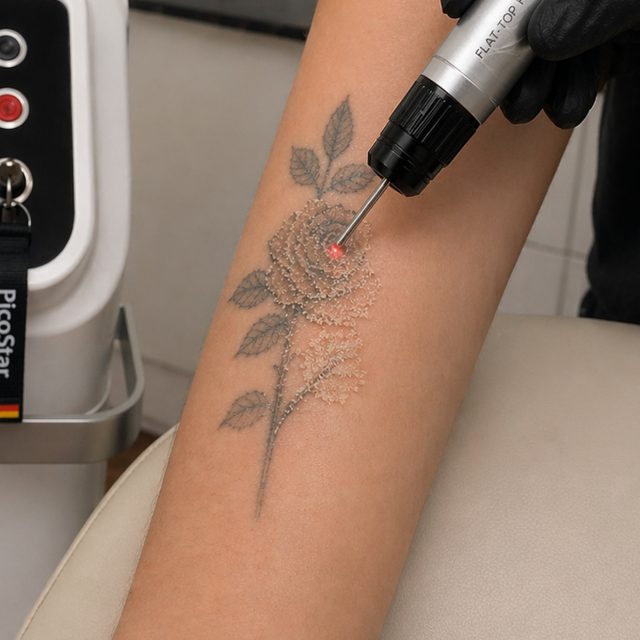
Thinking about covering an existing tattoo? PicoStar laser treatment can help fade the old ink before your new design, giving your tattoo artist a clearer starting point.
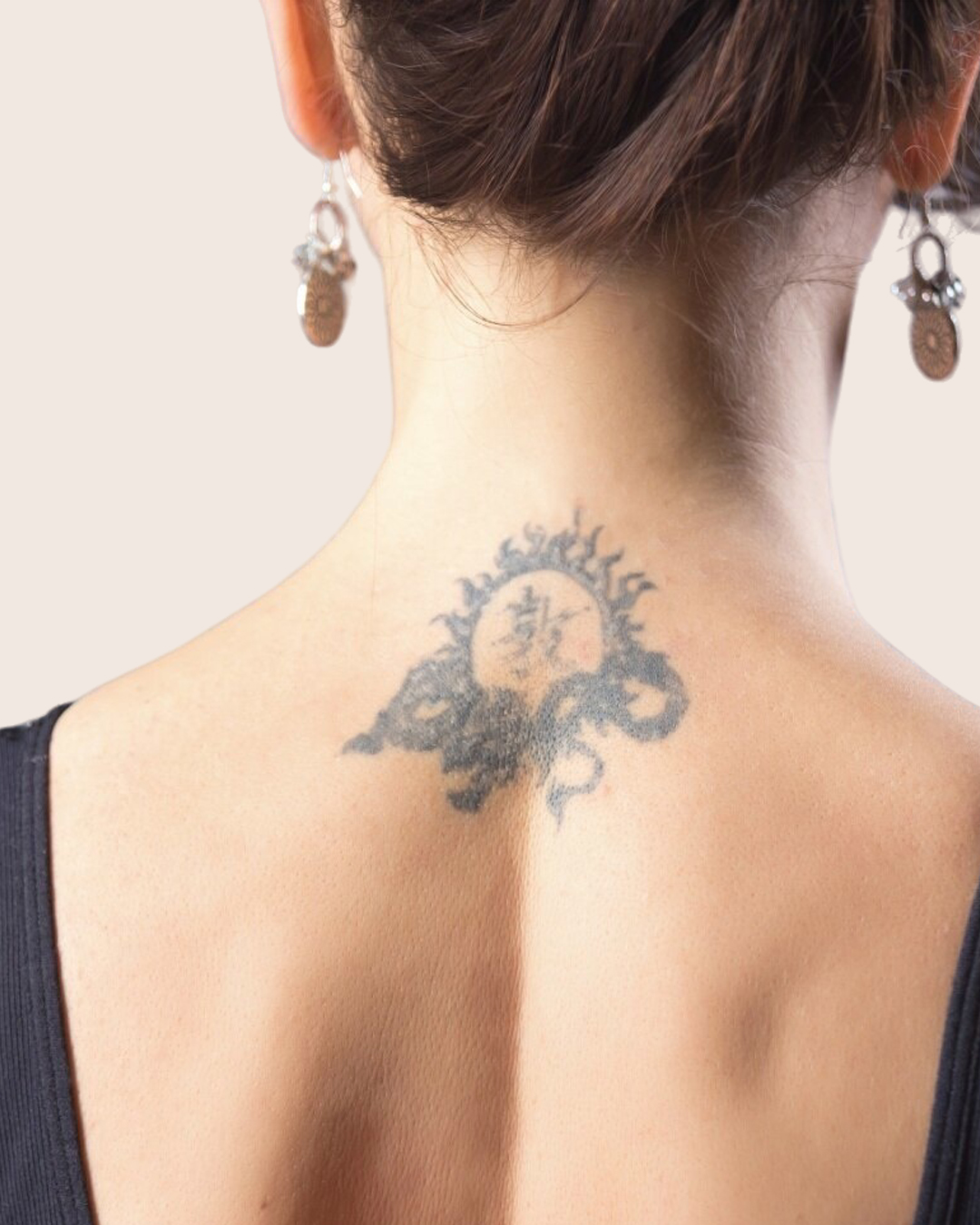
Laser tattoo cover-up is a targeted approach that fades an existing tattoo so it can be covered more effectively with a new design. Rather than removing the tattoo completely, the focus is on reducing the density and visibility of the original ink, creating a cleaner foundation for a more refined cover-up.
Attempting to cover a tattoo without prior fading often requires darker, heavier ink and limits what can be achieved. By softening the original pigment, laser tattoo removal allows for greater flexibility in design, colour and detail.
Tattoo fading uses advanced laser technology to break down ink particles within the skin. At the clinic, this is performed using the PicoStar laser, a picosecond device designed to target pigment with high precision while minimising damage to the surrounding tissue.
The laser delivers ultra-short pulses of energy that fragment the ink into smaller particles, which are then gradually cleared by the body. Over a series of sessions, the tattoo becomes progressively lighter.
The goal is controlled lightening, enough to reduce the dominance of the original tattoo without full removal, allowing a cleaner base for a cover-up.
Fading the tattoo first significantly improves the final result.
Without fading, cover-ups often:
With fading, the new tattoo can be:
This step gives both you and your tattoo artist more creative control.
Once the tattoo has reached the desired level of fading and the skin has fully healed, your tattoo artist can proceed with the new design.
This is typically a few weeks after your final session, depending on how the skin responds.
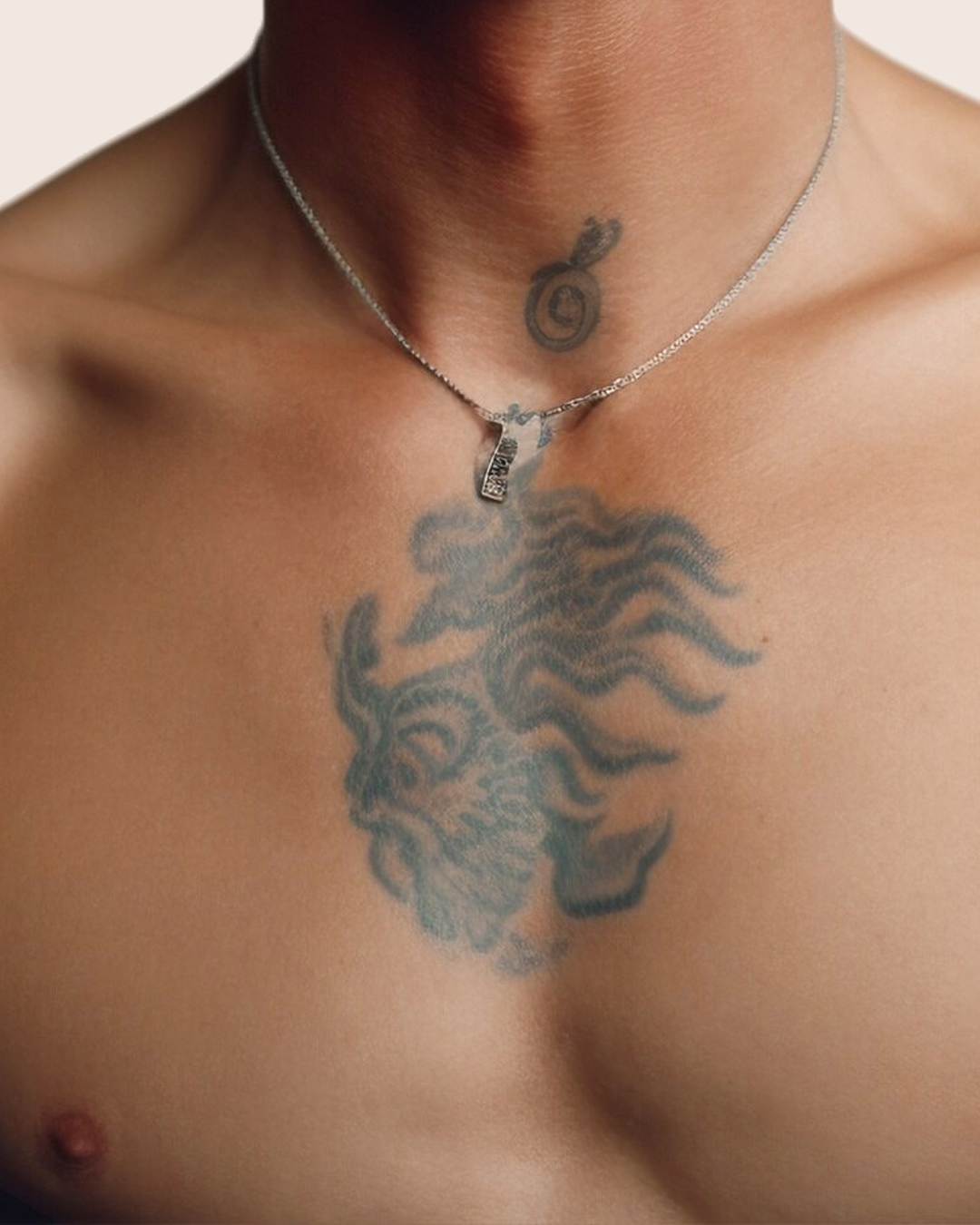
Laser tattoo fading is ideal for those who:
A consultation helps determine how much fading is needed before your cover-up.
Most tattoos require 2 to 5 sessions to fade sufficiently for a cover-up.
The exact number depends on:
The aim is not to fully remove the tattoo, but to reach the ideal level of lightening.
After each session, you may experience:
These effects usually settle within a few days. Proper aftercare is essential to support healing and optimise results.
Yes, a cover-up tattoo can be treated with laser if needed. However, because cover-ups often use darker and denser ink to mask the original design, they can be more challenging to treat and may require additional sessions. In most cases, a consultation is needed to assess how the layers of ink will respond to laser treatment.
Yes, this is a common and highly effective approach. Laser tattoo fading is used to lighten the existing ink rather than remove it completely. By reducing the density of the original tattoo, the skin becomes a cleaner base, allowing a new design to be applied with greater precision, flexibility and better overall aesthetic outcome.
Most tattoos require 2 to 5 sessions to fade sufficiently for a cover-up. The exact number depends on factors such as ink colour, depth, density and skin type. The aim is controlled lightening rather than full removal, so treatment is tailored to achieve the right level of fading for your new design.
In some cases, tattoos can be removed to a very high degree, but complete removal is not always guaranteed. Results depend on the ink used, depth, colour and how the skin responds to treatment. For cover-up purposes, full removal is usually not necessary, as partial fading is often enough to achieve a better result.
In most cases, fading a tattoo for a cover-up is more cost-effective than complete removal, as fewer sessions are required. A full removal typically involves more treatments over a longer period, whereas fading focuses only on reducing the ink enough to allow a new design.
Laser tattoo removal can involve multiple sessions, and results are gradual rather than immediate. Some discomfort, temporary redness or swelling is expected after treatment. Certain colours and deeper inks may take longer to respond, and complete removal is not always possible. Choosing the right technology and an experienced practitioner helps minimise these limitations.
Many people choose a cover-up rather than full removal because it offers a faster and more creative solution. Instead of removing the tattoo entirely, fading it allows for a new design that better reflects their current style or preferences. It also typically requires fewer sessions and can achieve a more visually satisfying result in a shorter timeframe.