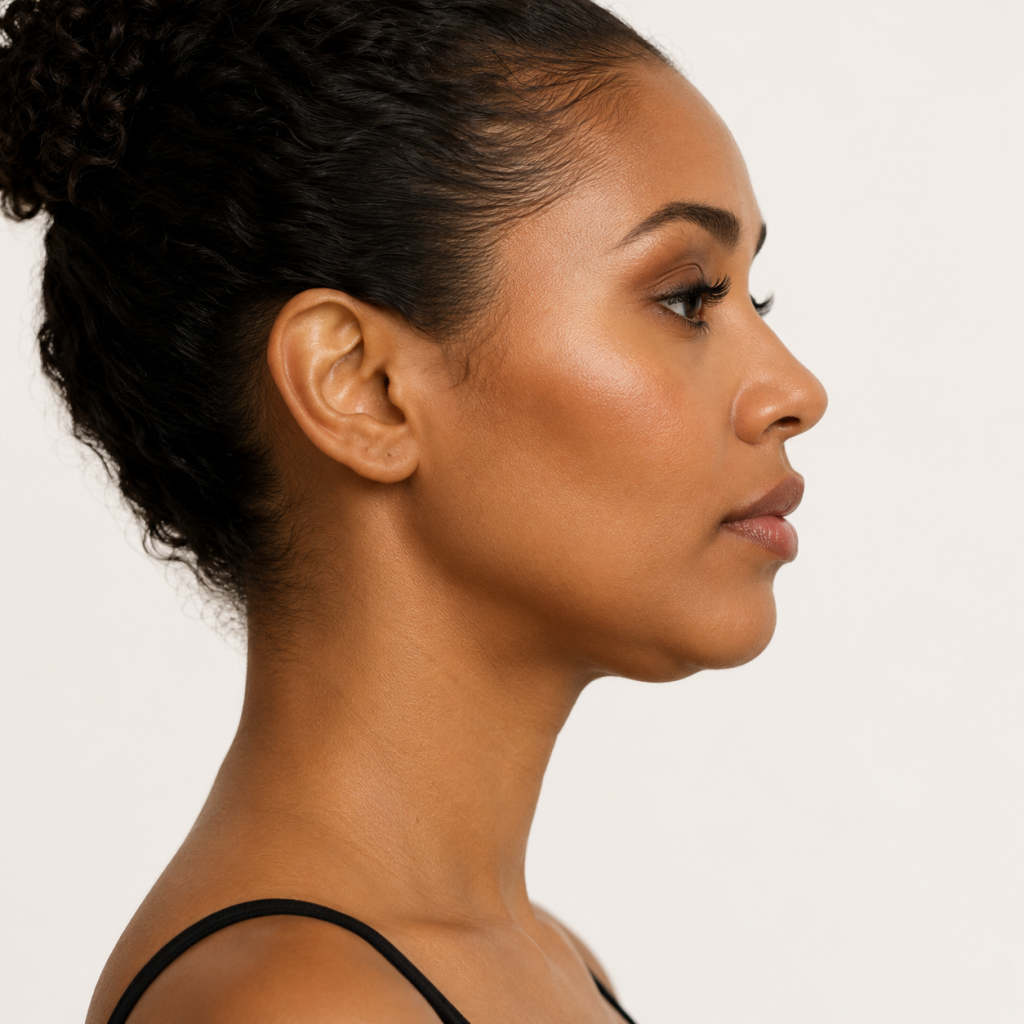
Many people assume that a double chin is always linked to excess weight. However, it is not uncommon for individuals with a healthy weight and slim facial features to notice fullness beneath the chin. This often leads to the question: what causes a double chin even when you’re slim?
The answer is often more complex than body weight alone. Genetics, skin quality, facial structure, and the ageing process can all contribute to the appearance of a double chin, even in people who maintain a healthy lifestyle.
A double chin, also known as submental fullness, refers to the appearance of excess fullness or loss of definition beneath the chin and along the jawline.
While fat accumulation can contribute to this area, it is only one of several possible causes. In many cases, the concern is related to anatomy and tissue changes rather than overall weight gain.
When asking what causes a double chin even when you’re slim, genetics are often one of the biggest factors. Some people naturally store more fat beneath the chin regardless of their overall body composition.
Others inherit a facial structure that creates less distinction between the jawline and neck, making fullness beneath the chin more noticeable even when very little fat is present.
This is why some individuals develop a double chin despite maintaining a healthy weight and active lifestyle.
Ageing can also contribute significantly to the appearance of a double chin. As collagen and elastin levels decline, the skin becomes less firm and supportive.
Over time, the tissues beneath the chin may begin to lose definition, creating the appearance of fullness even when fat is not the primary issue. This is often accompanied by mild skin laxity around the jawline and neck.
Not every double chin is caused by fat. In some individuals, loose skin is the main concern. As the skin loses elasticity, it may begin to hang slightly beneath the chin, creating a softer profile and reducing jawline definition.
This is why two people with the same amount of body fat can have very different jawline appearances.
Facial anatomy can also influence how prominent a double chin appears. A naturally smaller chin, a recessed jawline, or changes in posture can affect the angle between the face and neck.
While posture does not directly cause a double chin, it can make existing fullness appear more noticeable in certain situations.
The most appropriate treatment depends on whether the fullness beneath the chin is caused by excess fat, skin laxity, or a combination of both.
For patients with stubborn fat deposits under the chin, liposuction remains one of the most effective options. By physically removing excess fat, it can significantly improve jawline definition and create a more sculpted profile. This is often suitable for individuals who maintain a healthy weight but have genetically inherited fullness beneath the chin.
For those experiencing mild to moderate skin laxity alongside excess fullness, Endolift can be an effective alternative. The treatment uses laser energy beneath the skin to stimulate collagen production, tighten connective tissue, and improve definition around the chin and jawline. In selected patients, it can also help reduce small pockets of unwanted fat.
Where both fat reduction and skin tightening are required, FaceTite may be considered. This treatment uses radiofrequency-assisted technology to target deeper tissues, helping to contour the area beneath the chin while simultaneously improving skin firmness. It is often chosen by patients looking for a more significant improvement without undergoing a traditional facelift.
Because a double chin can be caused by different factors, identifying whether the concern is primarily related to fat, skin, or facial structure is essential before selecting the most appropriate treatment.
Understanding what causes a double chin even when you’re slim is important because the solution depends on the underlying reason for the concern. Weight loss alone is not always enough, particularly when genetics, skin laxity, or facial structure are involved.
By identifying whether the issue relates to fat, skin, or anatomy, it becomes much easier to select the most appropriate treatment and achieve a more defined and balanced facial profile.
A double chin is not always related to body weight. Genetics, facial structure, skin laxity, and the natural ageing process can all contribute to fullness beneath the chin. The most effective treatment depends on the cause. If excess fat is present, treatments such as liposuction may be considered, while skin tightening procedures like Endolift or FaceTite may be more appropriate when laxity is the primary concern.
Improving a double chin starts with understanding what is causing it. While maintaining a healthy lifestyle can help reduce overall body fat, some people retain fullness beneath the chin regardless of their weight. Treatments that target fat reduction, improve skin tightening, or enhance jawline definition can often provide more noticeable improvement when diet and exercise alone are not enough.
Drinking water is important for overall health and can help reduce temporary fluid retention that may make the face appear puffy. However, water alone will not remove a true double chin caused by excess fat, skin laxity, or genetics. If fullness beneath the chin persists despite a healthy lifestyle, it may be related to factors that require a more targeted treatment approach.
