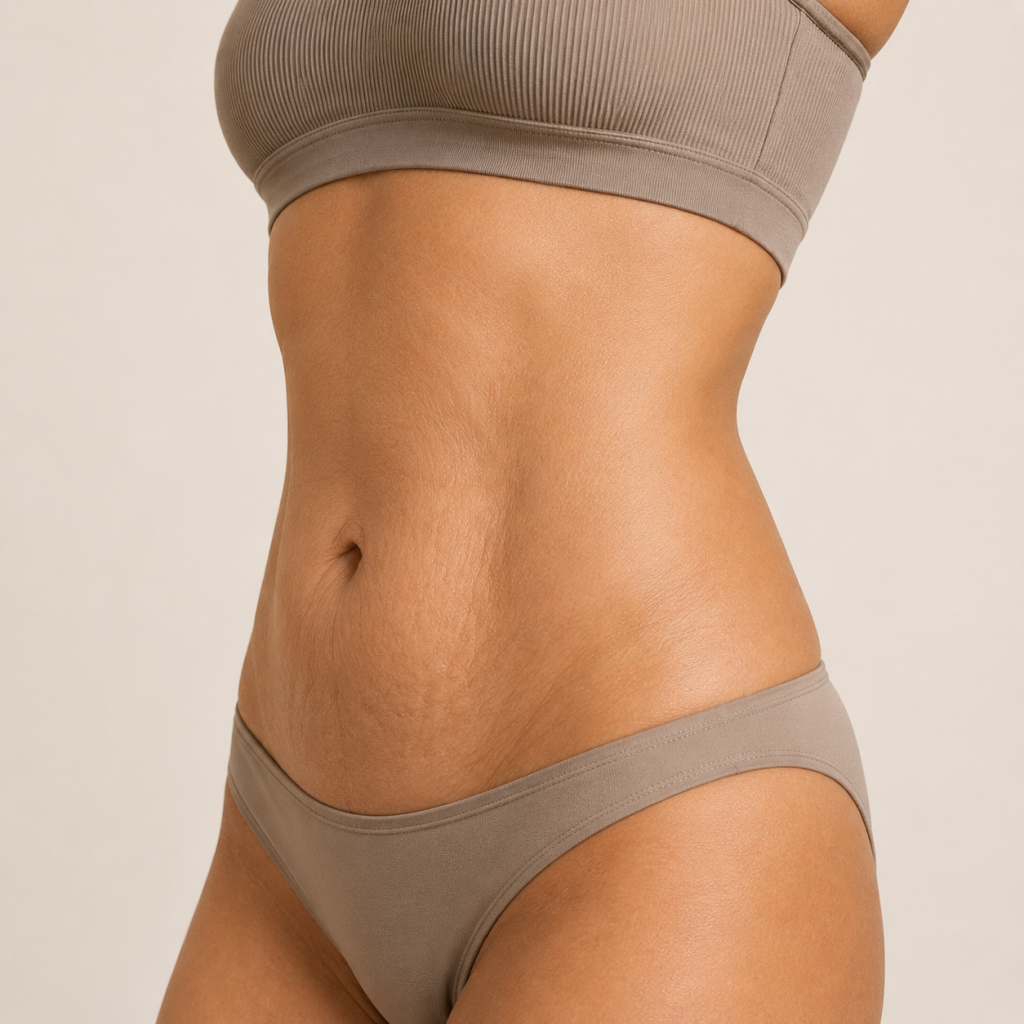
Losing weight is a significant achievement, but for many people, it can leave behind loose or sagging skin. This is particularly common after substantial weight loss, when the skin has stretched over time and is unable to fully retract. As a result, many people ask: what is the best treatment for loose skin after weight loss?
The answer depends on several factors, including the amount of loose skin, the area being treated, the quality of the skin, and the individual’s aesthetic goals. Today, there are both minimally invasive and surgical options that can improve skin laxity.
The skin stretches to accommodate changes in body size. If it remains stretched for a prolonged period, the collagen and elastin fibres responsible for its strength and elasticity may become damaged.
Following weight loss, particularly after losing a large amount of weight, the skin may not have enough elasticity to contract fully. Age, genetics, smoking, and sun exposure can all influence how well the skin recovers.
When asking what is the best treatment for loose skin after weight loss, it is important to understand that there is no single treatment suitable for everyone.
For mild skin laxity, collagen-stimulating treatments may provide noticeable improvement. For moderate laxity, minimally invasive procedures can tighten the skin while improving body contours. Where there is significant excess skin, surgery often remains the most effective option.
The most appropriate treatment depends on the severity of the skin laxity and the area being treated.
For patients with mild to moderate loose skin on the abdomen, arms, thighs, or other areas of the body, BodyTite can be an effective treatment.
Using radiofrequency-assisted technology, BodyTite delivers controlled heat beneath the skin to tighten connective tissue, stimulate collagen production, and reduce small areas of unwanted fat. As collagen continues to develop, the skin gradually becomes firmer and more defined.
It is particularly suitable for patients who have good skin quality but require more tightening than non-invasive treatments can provide.
For more localised areas of skin laxity, Endolift can provide targeted skin tightening using laser energy delivered beneath the skin.
The treatment stimulates collagen production while tightening connective tissue, making it suitable for areas such as the neck, jawline, lower face, and selected areas of the body where mild to moderate skin laxity is present.
Weight loss does not only affect the body. Many people notice skin laxity around the jawline, cheeks, and neck following significant weight reduction.
FaceTite is designed to tighten the deeper tissues of the face and neck using radiofrequency-assisted technology. It can improve facial definition, reduce skin laxity, and create a firmer, more sculpted appearance without the need for a traditional facelift.
If there is a large amount of excess skin following significant weight loss, minimally invasive treatments may not be sufficient to achieve the desired result.
Procedures such as a tummy tuck, arm lift, thigh lift, or lower body lift physically remove excess skin while tightening the remaining tissues. In these situations, surgery generally provides the most significant and long-lasting improvement.
Understanding, what is the best treatment for loose skin after weight loss, begins with identifying how much skin laxity is present and what is causing the concern.
For mild to moderate skin laxity, treatments such as BodyTite, Endolift, and FaceTite can stimulate collagen, tighten the skin, and improve body contours with less downtime than traditional surgery. For more advanced cases involving significant excess skin, surgical body contouring procedures often remain the most effective solution.
Choosing the right treatment is not about selecting the newest technology, but about matching the procedure to the individual’s anatomy and achieving the safest, most natural-looking result.
The skin's natural firmness depends on healthy collagen and elastin production. Maintaining a balanced diet rich in protein, staying hydrated, protecting the skin from sun damage, and avoiding smoking can all support skin health. While these habits help maintain skin quality, they cannot tighten significant loose skin caused by ageing or substantial weight loss. More advanced skin laxity may require targeted aesthetic or surgical treatments.
It is possible, but it depends on several factors including your age, genetics, skin elasticity, how quickly you lose the weight, and how long the skin has been stretched. Younger individuals with good skin elasticity may experience less loose skin, while those who lose a significant amount of weight rapidly are generally more likely to notice skin laxity afterwards.
Yes, sagging skin can often be improved, although the extent of improvement depends on its severity. Mild to moderate skin laxity may respond well to collagen-stimulating treatments that tighten and strengthen the skin, while more advanced cases with significant excess skin may require surgical body contouring procedures. The most appropriate treatment depends on the amount of loose skin and the area being treated.
