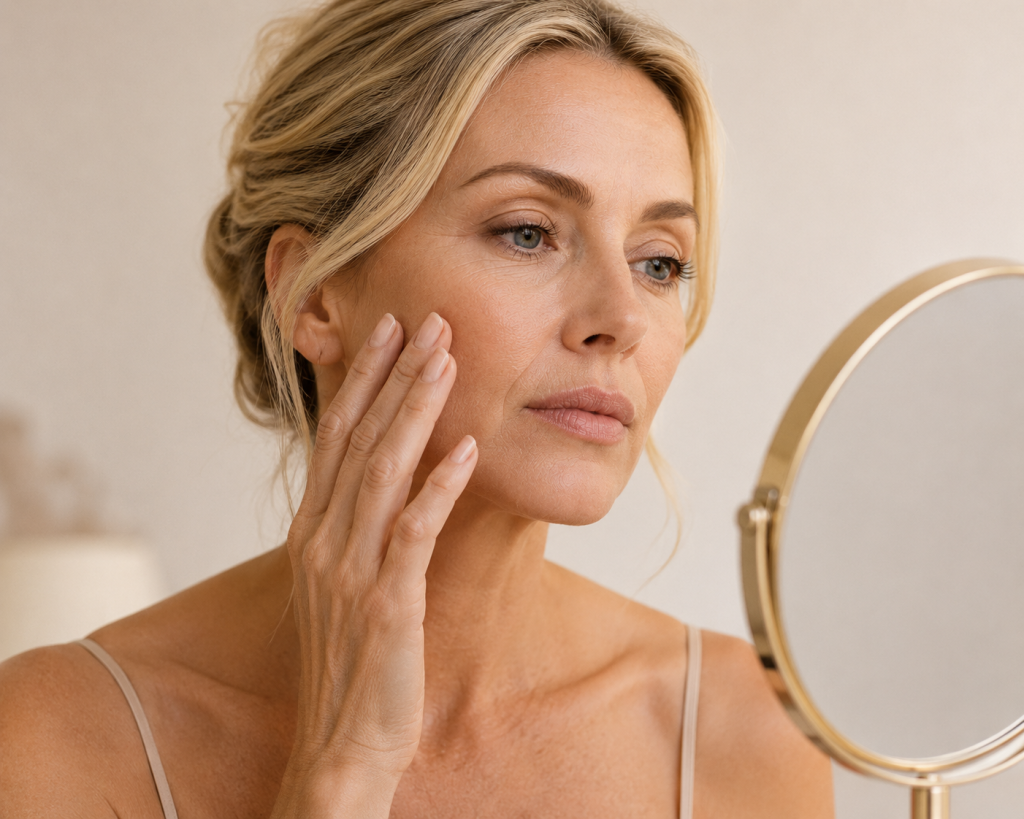
Many people notice a significant change in their skin during their forties. Fine lines may become more noticeable, skin can feel less firm, and recovery from environmental damage often takes longer than it did in earlier years. This leads to a common question: why does skin age faster after 40?
While ageing is a natural process, several biological changes occur around this stage of life that can make the signs of ageing appear more rapidly.
The skin is constantly renewing itself, but this process gradually slows with age. By the time many people reach their forties, the production of collagen and elastin has already been declining for several years.
Collagen provides structure and firmness, while elastin allows the skin to stretch and return to its original position. As these proteins become less abundant, the skin starts to lose strength, resilience, and elasticity.
At the same time, cell turnover slows down, meaning the skin takes longer to shed old cells and replace them with new ones. This can contribute to a duller complexion and uneven texture.
When asking why does skin age faster after 40, hormones are often a major factor. During this stage of life, levels of oestrogen begin to decline, particularly in women approaching menopause. Oestrogen plays an important role in maintaining skin hydration, collagen production, and overall skin thickness.
As hormone levels change, the skin may become thinner, drier, and less elastic. Combined with the natural reduction in collagen production, this can make wrinkles and skin laxity appear more noticeable.
The effects of previous sun exposure also begin to accumulate. Damage caused by ultraviolet radiation during earlier decades often becomes more visible in the forties, contributing to pigmentation, uneven tone, and loss of firmness.
Ageing after 40 is not limited to the skin itself. The face gradually loses fat, bone density, and structural support. This can create hollow areas, deeper folds, and changes in facial contours.
As volume decreases, the skin has less support beneath it, making sagging and skin laxity more apparent. This is one reason why the ageing process can seem to accelerate during this decade.
Although ageing is a natural process, there are ways to support the skin and help maintain its quality as collagen production declines. Consistent sun protection remains one of the most effective strategies, as ultraviolet exposure is responsible for a significant proportion of visible skin ageing.
Many people also choose treatments that stimulate collagen and encourage skin renewal. Technologies such as SylfirmX use radiofrequency microneedling to improve skin firmness, refine texture, and support long-term collagen production. This makes it a popular option for those noticing early signs of skin laxity or changes in skin quality.
Laser treatments can also play an important role in skin maintenance. CO2 laser resurfacing works by removing damaged skin cells and stimulating new collagen formation, helping to improve fine lines, texture, and overall skin tone. Because it targets both the surface and deeper layers of the skin, it is often used to address more established signs of ageing.
For individuals looking to improve pigmentation, sun damage, and early skin ageing, Picostar laser can help by stimulating collagen while targeting unwanted pigment. This can contribute to a brighter, smoother complexion and help maintain a more youthful skin appearance over time.
The aim of these treatments is not to stop ageing, but to support healthier skin, improve skin quality, and slow the visible effects of collagen loss.
Understanding why does skin age faster after 40 helps explain why changes become more noticeable during this stage of life. Reduced collagen production, hormonal shifts, accumulated sun damage, and loss of facial support all contribute to the ageing process.
While these changes are inevitable, taking a proactive approach to skin health can help maintain a smoother, firmer, and more radiant complexion for longer.
Many people notice more visible signs of ageing in their forties because collagen and elastin production have been declining for years. Hormonal changes, accumulated sun exposure, lifestyle factors, and natural volume loss can all contribute to thinner skin, deeper lines, pigmentation, and reduced firmness. While these changes are normal, maintaining good skin health and supporting collagen production can help improve overall skin quality.
Some of the most effective habits for supporting healthy skin include wearing daily sun protection, maintaining a balanced diet rich in antioxidants, avoiding smoking, and prioritising good sleep. Consistent skincare and protecting the skin from environmental damage can also help preserve collagen and maintain a healthier complexion. While ageing cannot be prevented, these habits can help slow the visible signs associated with it.
Ageing is a gradual process, but many people notice more significant changes during their forties and fifties. This is often when collagen loss, reduced skin elasticity, hormonal changes, and facial volume loss become more noticeable. The exact timing varies between individuals and is influenced by genetics, lifestyle, sun exposure, and overall skin health.
