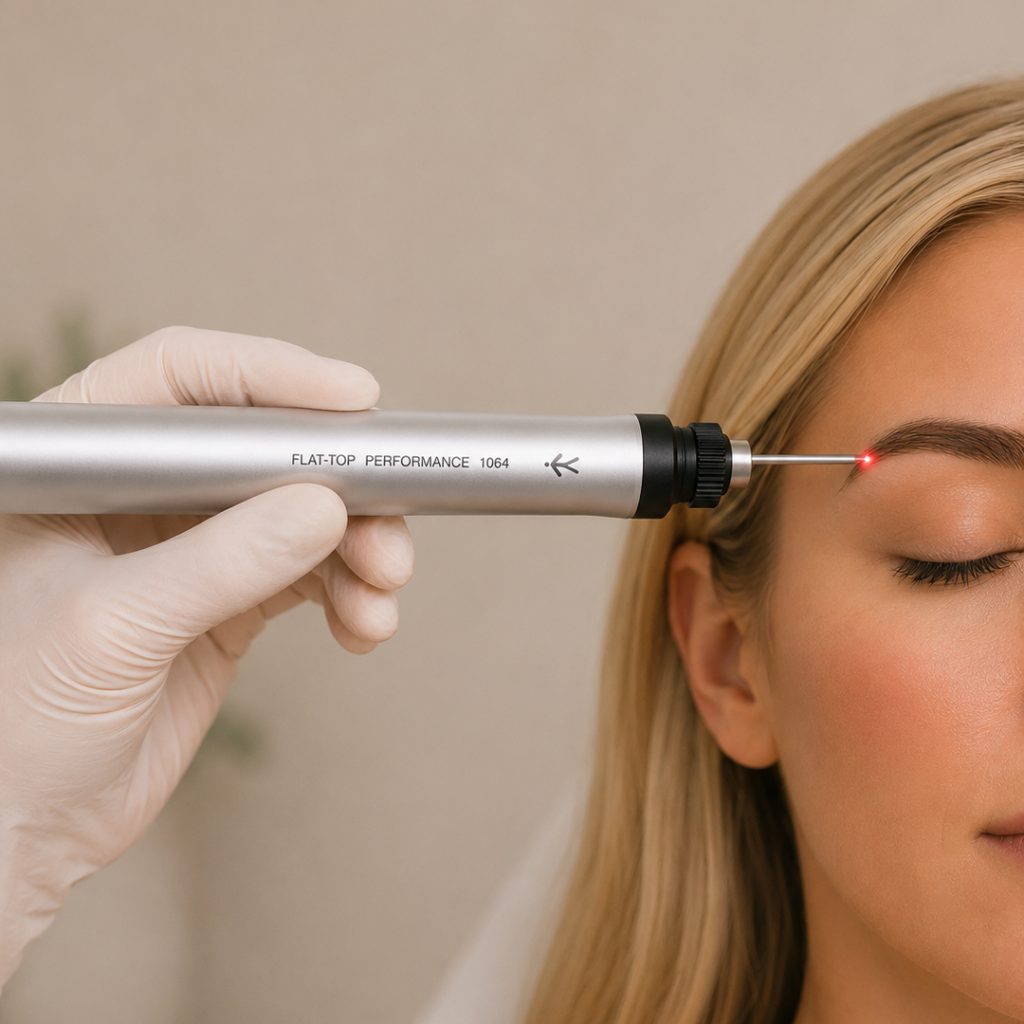
Permanent make-up is designed to last longer than traditional cosmetics, but that doesn’t always mean people want to keep it forever. Eyebrow tattoos may change colour, lip blush can lose definition, and styles that once felt flattering may no longer suit the face. This often leads to one question: can cosmetic tattoos be removed?
In many cases, yes. Laser technology can reduce the appearance of unwanted cosmetic tattoos by breaking down pigment beneath the skin, allowing the body to clear it naturally over time. However, cosmetic tattoo removal is more complex than removing a standard body tattoo because permanent make-up pigments behave differently when exposed to laser energy.
At SRGN, cosmetic tattoo removal is offered exclusively at the Ascot clinic, where treatments are carried out by Lana, Aesthetic Therapist, using the PicoStar laser.
A cosmetic tattoo is a form of permanent or semi-permanent make-up where pigment is implanted into the skin to enhance facial features.
Common treatments include:
Although these treatments are often described as semi-permanent, the pigment can remain visible for many years. As it ages, the colour may gradually fade, become uneven or shift in tone.
Many cosmetic tattoos can be lightened significantly with laser treatment, although the final outcome varies from person to person.
The response depends on several factors, including:
Some people choose laser treatment to remove the tattoo completely, while others simply want to fade it enough to allow for a new cosmetic tattoo with a better shape or colour.
Unlike traditional black tattoo ink, permanent make-up often contains a mixture of pigments.
Some cosmetic pigments include white, beige, yellow or red components, which can react differently during laser treatment. In certain cases, these pigments may temporarily darken before they begin to fade. This is one reason why an individual assessment is so important before treatment starts.
Lana explains:
“Every cosmetic tattoo is different. Before we begin treatment, we assess the colour, the age of the tattoo and how it is likely to respond so that we can create the safest treatment plan possible.”
PicoStar uses extremely short pulses of laser energy to target tattoo pigment beneath the surface of the skin.
Rather than damaging the surrounding tissue, the laser breaks the pigment into much smaller particles. These fragments are then gradually removed by the body’s natural immune processes over the weeks following treatment.
Different wavelengths can target different pigment colours, allowing treatments to be tailored according to the individual tattoo.
Yes, many microblading treatments respond well to laser tattoo removal.
However, microblading pigments vary considerably between manufacturers and practitioners. Some eyebrows fade into warm red or orange tones, while others become grey or blue over time. Because of this, treatment may need to be adjusted as the pigment changes throughout the removal process.
A consultation helps determine whether PicoStar is suitable and whether a test patch should be carried out first.
A patch test is always recommended for cosmetic tattoos because the exact pigment composition is not always known.
Testing a small area allows the practitioner to observe how the pigment reacts before treating the full tattoo. This is particularly helpful when older permanent make-up has been applied or when multiple treatments have been performed over the years.
The results of the patch test help guide the safest and most appropriate treatment approach.
There is no fixed number of sessions for cosmetic tattoo removal.
Some tattoos fade relatively quickly, while others require additional treatments because of the pigment type, depth or density.
Each session gradually reduces the amount of visible pigment, and appointments are spaced several weeks apart to allow the skin to heal and the body to clear the fragmented particles naturally.
Lana says:
“Tattoo removal is a gradual process rather than an instant one. We review the progress after every session and adjust the treatment according to how the pigment is responding.”
Laser treatment may be suitable for permanent eyeliner and lip blush, although these areas require additional care because of their location and the pigments commonly used.
Not every cosmetic tattoo will respond in the same way, so a consultation is essential to determine whether laser treatment is appropriate.
Following treatment, it is normal for the area to feel warm or appear slightly red and swollen for a short time.
As the skin heals, the pigment gradually fades over the following weeks. Patients should follow the aftercare advice provided, avoid picking the treated area and protect the skin from excessive sun exposure while healing.
Because the body’s immune system removes the pigment fragments gradually, results continue to develop between appointments.
For many unwanted cosmetic tattoos, laser removal offers a safe and effective way to reduce visible pigment without surgery.
The outcome depends on the type of permanent make-up, the colours used and how the skin responds to treatment. While complete removal cannot always be guaranteed, many patients achieve significant fading that allows them either to enjoy a more natural appearance or undergo new cosmetic tattooing.
In our clinic, cosmetic tattoo removal is performed exclusively at the Ascot clinic by Lana, Aesthetic Therapist, using PicoStar laser technology. Every treatment begins with a detailed assessment to determine the safest and most appropriate approach for each individual tattoo.
Most tattoos can be lightened with laser treatment, but not all can be removed completely. The outcome depends on factors such as the ink colour, pigment composition, depth of the tattoo, age of the tattoo and individual skin response. Cosmetic tattoos containing white, beige or certain coloured pigments can be more challenging to treat, and some may only fade partially rather than disappear entirely.
The most common method of removing cosmetic tattoos is laser tattoo removal. Picosecond lasers, such as PicoStar, deliver short pulses of energy that break the tattoo pigment into tiny particles, allowing the body's immune system to gradually clear them away. Several treatment sessions are usually required, and the number depends on the type of pigment, its depth and how the skin responds to treatment.
Cosmetic tattooing is considered long-lasting, but it is not always permanent in the way traditional body tattoos are. Over time, the pigment can gradually fade or change colour due to natural skin renewal, sun exposure and individual metabolism. Although some cosmetic tattoos become less noticeable, many remain visible for several years and may require maintenance, correction or laser removal if they are no longer desired.
