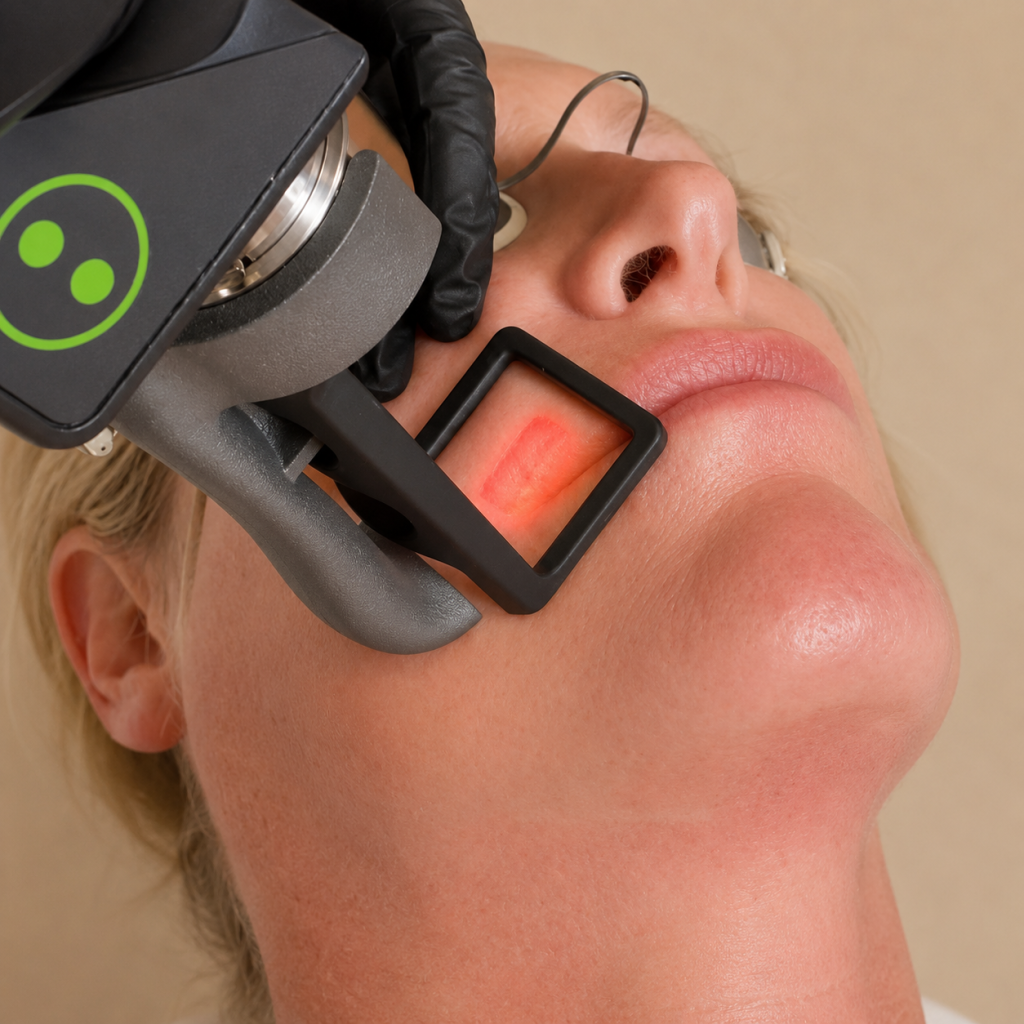
Uneven skin texture is one of the most common skin concerns seen in aesthetic practice. Rough patches, enlarged pores, acne scars, fine lines, and sun damage can all affect how smooth and healthy the skin appears. It is therefore no surprise that many people ask: can laser treatments improve skin texture?
According to Rebecca, our aesthetic therapist, laser treatments can be highly effective when the correct technology is matched to the patient’s concerns.
When patients talk about skin texture, they’re often referring to several issues at once. It could be enlarged pores, acne scarring, roughness, pigmentation, or early signs of ageing. The key is identifying what’s causing the texture changes before selecting the most suitable treatment.
The skin naturally changes over time. Collagen production gradually declines, cell turnover slows down, and environmental factors such as sun exposure begin to take their toll.
Past acne can leave behind scarring and irregularities, while UV damage can contribute to roughness, pigmentation, and visible pores. As these changes accumulate, the skin may lose its smooth, even appearance.
When asking can laser treatments improve skin texture, the answer is often yes. Laser treatments work by stimulating the skin’s natural repair mechanisms, encouraging collagen production and cellular renewal.
Rebecca explains:
The goal isn’t simply to remove damaged skin. We want to encourage healthier skin to develop underneath. By stimulating collagen and supporting skin renewal, we can often improve texture, tone, and overall skin quality.
Different laser technologies achieve this in different ways, which is why treatment selection is important.
For more significant texture concerns, CO2 laser resurfacing is often considered one of the most effective options. The treatment creates controlled micro-injuries within the skin, removing damaged surface layers while stimulating collagen production deeper within the tissue.
Rebecca notes:
CO2 laser is particularly useful for acne scarring, deeper lines, and more advanced textural concerns. The resurfacing effect can create significant improvements in skin smoothness while encouraging long-term collagen production.
As the skin heals, new collagen forms, helping to improve texture, firmness, and overall skin quality.
For patients seeking a less intensive approach, Cool Laser offers skin rejuvenation with reduced downtime. The treatment focuses on stimulating renewal while minimising thermal damage to surrounding tissue.
Cool Laser can be an excellent option for patients who want to refresh their skin and improve texture without undergoing a more intensive resurfacing procedure, says Rebecca.
The treatment can help improve mild textural irregularities, dullness, and early signs of skin ageing.
While many people associate Picostar laser with pigmentation treatment, Rebecca frequently uses it as part of a broader skin rejuvenation strategy.
Picostar doesn’t just target pigmentation. The laser’s ultra-short pulses stimulate collagen beneath the skin, which can help refine pores, improve overall texture, and support healthier-looking skin.
This makes it particularly useful for patients looking to improve both skin tone and texture simultaneously.
Not all texture concerns require the same solution. Some patients benefit from deeper resurfacing with CO2 laser, while others achieve excellent results with Picostar or Cool Laser, depending on their skin condition and goals.
Rebecca advises:
The best treatment is always the one that addresses the cause of the problem. Skin texture isn’t one condition, so treatment should never be one-size-fits-all.
Understanding can laser treatments improve skin texture highlights the versatility of modern laser technology. Whether the concern is acne scarring, roughness, enlarged pores, or early signs of ageing, treatments such as CO2 laser, Cool Laser, and Picostar can help stimulate collagen, improve skin quality, and create a smoother complexion.
With the right treatment approach, improvements in texture can continue to develop long after the initial treatment, helping the skin appear healthier, clearer, and more refined.
Laser treatments can be highly effective for improving textured skin by stimulating collagen production and encouraging skin renewal. Depending on the cause of the texture changes, whether from acne scarring, enlarged pores, sun damage, or ageing, different laser technologies may be recommended. Treatments such as CO2 laser, Cool Laser, and PicoSure can help smooth the skin's surface and improve overall skin quality over time.
Fractional laser treatments are not typically the first-line treatment for milia, which are small keratin-filled cysts that develop beneath the skin. However, they may help improve the overall texture of the skin and reduce the appearance of certain superficial imperfections. Milia are usually removed through a simple extraction procedure performed by a trained practitioner rather than through laser treatment alone.
The best treatment depends on the underlying cause of the texture concern. For deeper acne scars and more advanced skin ageing, CO2 laser resurfacing is often considered highly effective. For milder texture concerns, enlarged pores, or skin rejuvenation, treatments such as PicoSure or Cool Laser may be appropriate. A personalised assessment is usually the best way to determine which treatment will provide the most effective improvement.
