Posted on 12 August 2026
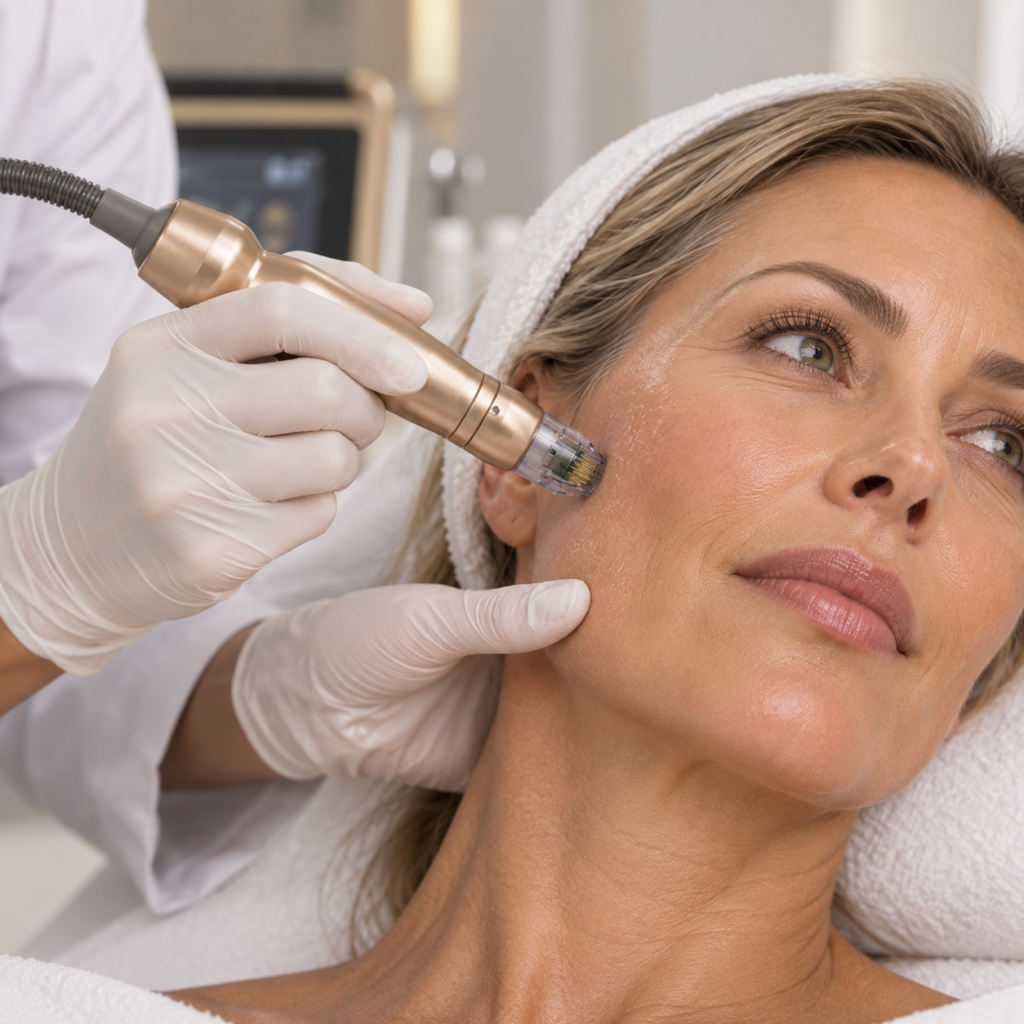
Skin can begin behaving differently during perimenopause, sometimes before the changes are immediately visible. A skincare routine that worked for years may suddenly feel inadequate. Skin may become drier, thinner or less resilient. Fine lines can become more noticeable, the lower face may appear less firm, and recovery from inflammation can feel different. These changes are not simply the result of getting older. Fluctuating and ultimately declining oestrogen levels during the menopausal transition can affect collagen, elasticity, hydration and other components of skin quality. Research consistently links oestrogen deficiency with changes in dermal collagen and skin elasticity. This is where treatments designed to stimulate the skin rather than simply add volume become particularly interesting. Sylfirm X combines radiofrequency energy with microneedling to create controlled stimulation within the skin, encouraging a natural repair response and progressive collagen remodelling.
Perimenopause is the transitional period leading up to menopause, during which hormone levels can fluctuate considerably. Oestrogen receptors are present within the skin, and oestrogen has an important relationship with collagen, hydration, elasticity and normal skin function. As oestrogen levels decline around menopause, research has documented reductions in collagen content, water content, elasticity and skin thickness. This can contribute to changes such as increased dryness, finer or more fragile-looking skin, loss of firmness and more noticeable lines. Not every woman experiences these changes at exactly the same time or to the same degree. Genetics, sun exposure, smoking, skincare, general health and chronological ageing continue to influence how the skin looks and behaves. Perimenopausal skin therefore needs to be assessed individually rather than treated as one universal skin type.
Collagen provides much of the structural framework within the dermis. As its quantity and organisation change with age and hormonal transition, the skin can gradually become thinner and less firm. Changes to elastin and naturally occurring substances responsible for retaining moisture can contribute further to the difference women notice in their skin. Applying a moisturiser can improve surface hydration, and appropriate skincare remains extremely important, but skincare alone cannot reproduce the controlled dermal stimulation created by an energy-based procedure. That is where radiofrequency microneedling works differently.
Sylfirm X is an RF microneedling device. Very fine needles enter the skin at controlled depths and deliver radiofrequency energy into the targeted tissue. This combines the controlled micro-injury associated with microneedling with thermal energy generated by radiofrequency. The resulting wound-healing response can stimulate processes associated with collagen remodelling and skin renewal. Radiofrequency and other energy-based technologies have been studied for their ability to stimulate neocollagenesis within the dermis. Importantly, Sylfirm X should not be thought of as simply another facial treatment for temporary radiance. Its purpose is to create controlled stimulation within the skin and allow biological remodelling to occur progressively afterwards.
“Rebuild” does not mean that Sylfirm X reverses perimenopause or restores the skin to its pre-hormonal state. It describes the process of stimulating tissue remodelling. When controlled microneedling and radiofrequency energy are delivered into the skin, the resulting repair response can encourage fibroblast activity and the production and remodelling of collagen. This is particularly relevant when one of the concerns is declining skin firmness. The result is not immediate artificial volume. Instead, improvements develop gradually as the skin responds to treatment.
One of the challenges of treating perimenopausal skin is that several changes can happen simultaneously. A woman may have fine lines, increasing laxity and uneven texture while also feeling that her skin has become drier and more sensitive. Simply adding dermal filler does not necessarily address these changes. Dermal Filler is primarily a structural and volumising treatment. It can be very useful when genuine facial volume has been lost, but it does not automatically correct declining skin quality. Sylfirm X approaches the problem differently by targeting the skin itself. For someone whose principal concern is firmness, texture and declining skin quality rather than missing facial volume, this distinction can be important.
RF microneedling can improve the appearance of mild skin laxity by stimulating dermal remodelling, but the word “skin tightening” needs realistic expectations. Sylfirm X cannot surgically reposition significantly descended facial tissue. Where laxity is mild, improving collagen and dermal quality may create a firmer appearance. Where jowling or tissue descent is more advanced, other treatments may be more appropriate. This is why the same treatment should not automatically be recommended to every woman experiencing perimenopausal skin changes.
This is an understandable concern because discussions about RF treatments and facial fat loss frequently appear online. Sylfirm X is used at selected depths and parameters according to the treatment objective. Its intended skin-rejuvenation mechanism is controlled dermal stimulation and collagen remodelling rather than facial fat reduction. There are anecdotal reports online of facial volume changes following energy-based treatments, but these should not automatically be interpreted as evidence that Sylfirm X routinely “melts fat”. Treatment depth, energy, anatomy and technique matter. This is one reason RF microneedling should be planned according to the patient’s facial anatomy rather than applying identical settings to every face.
Perimenopausal skin concerns are not limited to laxity. Some women also notice changes in pigmentation, redness or increased reactivity. Sylfirm X has both pulsed-wave and continuous-wave radiofrequency modes, allowing practitioners to approach different skin concerns with different treatment parameters. However, pigmentation and redness should first be correctly diagnosed. Melasma, post-inflammatory pigmentation, rosacea and sun damage are different conditions and should not simply be grouped together as “uneven skin tone”. The correct treatment depends on what is causing the colour change.
Sylfirm X is itself a form of microneedling, specifically radiofrequency microneedling. Traditional microneedling creates controlled micro-injuries mechanically. Sylfirm X adds radiofrequency energy, creating an additional controlled thermal effect within the targeted tissue. This makes it incorrect to describe Sylfirm X and RF microneedling as separate technologies. The relevant comparison is conventional microneedling versus RF microneedling. Which is appropriate depends on the skin concern, treatment depth required and individual skin characteristics.
Not necessarily. Skin boosters and polynucleotides work differently. Injectable skin boosters can be used primarily to improve hydration and skin quality, while polynucleotides are used to support regenerative processes within the skin. Sylfirm X creates controlled mechanical and radiofrequency stimulation intended to trigger tissue remodelling. For perimenopausal skin presenting with several concerns simultaneously, a treatment plan may therefore involve different approaches rather than expecting one procedure to solve everything. Combination treatment should still be carefully planned rather than simply layering multiple procedures together.
Some patients may notice changes in skin appearance relatively early, but collagen remodelling takes time. The more meaningful changes associated with dermal remodelling develop progressively in the weeks and months following treatment. The number of treatments required also varies. Age, skin condition, degree of laxity, previous treatments and the concern being addressed all influence the treatment plan. This is why Sylfirm X should be considered a progressive skin treatment rather than an instant lifting procedure.
Understanding the limitations of Sylfirm X is just as important as understanding its benefits. It cannot replace lost facial volume in the way dermal filler or fat transfer can. It cannot reposition significantly descended tissues like a facelift. And it cannot stop the hormonal changes associated with perimenopause. It also should not be presented as a treatment for perimenopause itself. What it can do is target some of the visible skin-quality changes that may become more apparent during this stage of life.
The increasing understanding of menopausal skin is changing the way aesthetic treatments can be planned. A woman noticing changes in her forties or fifties does not necessarily need more facial volume. Sometimes the priority is improving the quality and resilience of the skin she already has. Research increasingly recognises the relationship between declining oestrogen and changes in collagen, elasticity and hydration, although aesthetic research specifically stratified by menopausal status remains comparatively limited. Sylfirm X radiofrequency microneedling offers one way of addressing this changing skin environment by creating controlled stimulation and encouraging collagen remodelling. It does not reverse hormonal ageing. Instead, the objective is more realistic: to work with the skin’s existing repair mechanisms to improve firmness, texture and overall skin quality as the skin changes through perimenopause.
Sylfirm X results are not permanent, as the skin continues to age naturally. Following a recommended treatment course, improvements may remain visible for around 6–12 months, although this varies according to age, skin condition, lifestyle and the concern being treated. Collagen remodelling develops gradually, so skin quality can continue to improve for several months after treatment. Maintenance sessions may help preserve the results over time.
RF microneedling can improve mild to moderate skin laxity around the lower face and jawline. The treatment delivers controlled radiofrequency energy beneath the skin while microneedling encourages a natural repair response, supporting new collagen and firmer-looking skin. This may soften the appearance of early jowling and improve jawline definition. Results depend on the degree of laxity, and more advanced sagging may require a different treatment approach.
Skin commonly becomes drier, thinner and less elastic around and after menopause as collagen levels gradually decline. Although this natural ageing process cannot be completely reversed, skin quality can be supported through daily sun protection, good hydration, balanced nutrition and consistent skincare. Treatments such as RF microneedling may also stimulate collagen remodelling and help improve firmness, texture and elasticity. The most appropriate approach depends on your skin condition and individual concerns.
