The neck is often one of the first areas to show visible signs of ageing. Horizontal lines can become deeper, the skin may begin to feel thinner or less firm, and repeated movement can make existing creases more noticeable. Sun exposure, collagen loss, genetics and the natural ageing process all contribute, which is why treating the neck successfully usually requires more than simply targeting a wrinkle at the surface. Although no non-surgical treatment can literally erase every deep neck line, modern aesthetic treatments can soften established creases, improve skin quality and address some of the structural changes that make the neck appear older.
The key is understanding what is causing the lines in the first place. A deeply etched horizontal crease may require a very different approach from loose, crepey skin or prominent vertical neck bands.
Anti-wrinkle injections work by temporarily reducing the activity of selected muscles. Around the neck, they may be considered when the platysma muscle is contributing to visible vertical bands or downward pulling around the lower face and jawline. This can create a smoother, more relaxed appearance in appropriately selected patients. However, anti-wrinkle injections are not a filler and cannot replace lost volume or physically fill a deep horizontal crease.
For someone whose main concern is strongly etched horizontal neck lines, another treatment or a combination approach may therefore be more appropriate. Careful assessment is particularly important in the neck because treatment must respect the anatomy and normal function of the muscles in this area.
Dermal fillers can be useful when horizontal neck lines have become visible even when the neck is relaxed. Rather than treating the entire neck, small amounts of carefully placed filler may be used to soften individual creases and reduce the shadow created by deeper lines. The aim is not to create volume in the neck but to make the transition between the crease and surrounding skin less noticeable.
This requires a conservative approach. The skin of the neck is relatively thin, and excessive product or inappropriate placement can create an unnatural appearance. Dermal filler is therefore most relevant when the problem is a defined, established line rather than general skin laxity.
Sometimes the issue is not one individual wrinkle but a gradual deterioration in the quality and firmness of the skin. Collagen-stimulating injectable treatments, often described as biostimulators, take a different approach from conventional dermal fillers. Rather than primarily filling a line, they are used to support gradual collagen production and improve the structure of the skin over time.
This can make them particularly interesting for an ageing neck where thinning, reduced firmness and fine creasing occur together. Results develop progressively rather than immediately. Biostimulators are therefore better viewed as a treatment for overall skin quality and support rather than a quick correction for a single deep line. Clinical research into injectable treatments for the neck has reported improvements in wrinkles and laxity, although treatment choice and outcomes vary considerably between individuals.
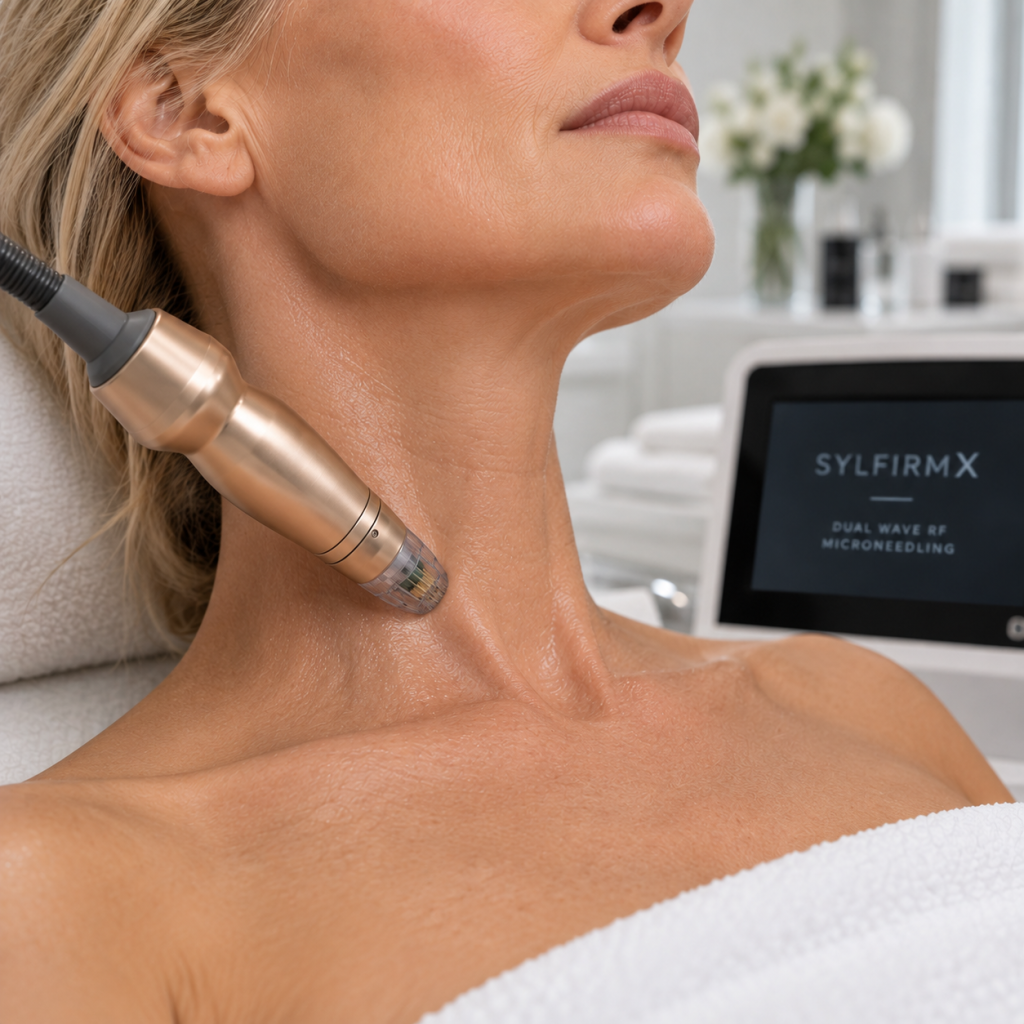
Sylfirm X combines radiofrequency energy with microneedling, allowing controlled energy to be delivered beneath the surface of the skin. For the neck, this can be useful when lines appear alongside mild skin laxity, uneven texture or a crepey appearance. The controlled treatment encourages a natural repair response and collagen remodelling, gradually improving the quality and firmness of the treated skin.
Unlike dermal filler, Sylfirm X does not fill an individual neck crease. Instead, it focuses on the surrounding skin and the underlying changes contributing to its appearance. This distinction matters. A deeply etched line may still remain visible, but improving the firmness and texture around it can make the neck look smoother and more refined overall. Results develop gradually over the weeks and months following treatment because collagen remodelling is an ongoing biological process rather than an immediate effect.
CO2 fractional laser is a more intensive option for people whose neck concerns include deeper lines, rough texture, pigmentation and visible sun damage. The laser creates controlled microscopic areas of treatment within the skin, stimulating repair and collagen remodelling while resurfacing damaged skin. Research into fractional CO2 treatment of the neck has shown improvement in horizontal lines, skin laxity and other signs of ageing.
However, this is not a zero-downtime treatment. Redness, swelling, dryness and peeling can occur during recovery, and the neck needs to be treated carefully because its skin behaves differently from facial skin. CO2 laser is therefore not automatically the right option simply because a wrinkle is deep. Skin type, pigmentation, previous treatments and the condition of the skin all need to be considered.
One reason neck lines can be difficult to treat is that several ageing processes are often happening at the same time. Someone may have a deep horizontal crease alongside thinning skin and mild laxity. Another person may have relatively good skin quality but visible platysmal bands. Treating both people in exactly the same way would make little sense. A treatment plan might therefore focus on muscle activity with anti-wrinkle injections, soften an established crease with dermal filler, support collagen with a biostimulator or Sylfirm X, or use CO2 laser when resurfacing and more significant textural improvement are needed.
The goal is not necessarily to remove every line. Completely line-free skin can look unnatural, particularly as we age. A more considered approach is to soften the features making the neck appear aged while preserving natural movement and proportion.
There is no single procedure that can completely erase deep neck lines for everyone. The most effective approach depends on whether the main problem is muscle movement, an established crease, collagen loss, loose skin, sun damage or a combination of these factors.
Anti-wrinkle injections, dermal fillers, biostimulators, Sylfirm X and CO2 laser all address different aspects of neck ageing. When selected according to the underlying cause rather than simply the appearance of the wrinkle, non-surgical treatments can make deep neck lines considerably softer and improve the overall quality of the neck without attempting to make the area look unnaturally smooth.
Natural measures can help improve the appearance of early neck lines, but they are unlikely to remove deeper creases completely. Daily sun protection, regular moisturising, good hydration and consistent skincare can support skin quality and help prevent lines becoming more pronounced. Avoiding repeated sun exposure and treating the neck as carefully as the face can also help. More established lines usually require professional treatment if a noticeable improvement is desired.
Vaseline cannot remove neck lines, although it can help reduce dryness by forming a protective barrier that limits moisture loss. This may make the skin look temporarily smoother and more supple, particularly if dryness is making fine lines appear more obvious. However, it does not rebuild lost collagen or correct deeper creases. Persistent neck lines are usually related to ageing, movement, skin laxity and changes in collagen rather than dryness alone.
Deep, dark neck lines may involve both skin creasing and pigmentation, so the cause should be identified before treatment. Sun exposure, friction, skin ageing and changes in pigmentation can all contribute. Treatments may include resurfacing, microneedling or other skin-rejuvenation procedures, depending on the skin type and concern. If the darkening is new, widespread, thickened or has a velvety appearance, it is important to seek medical assessment before considering cosmetic treatment.
