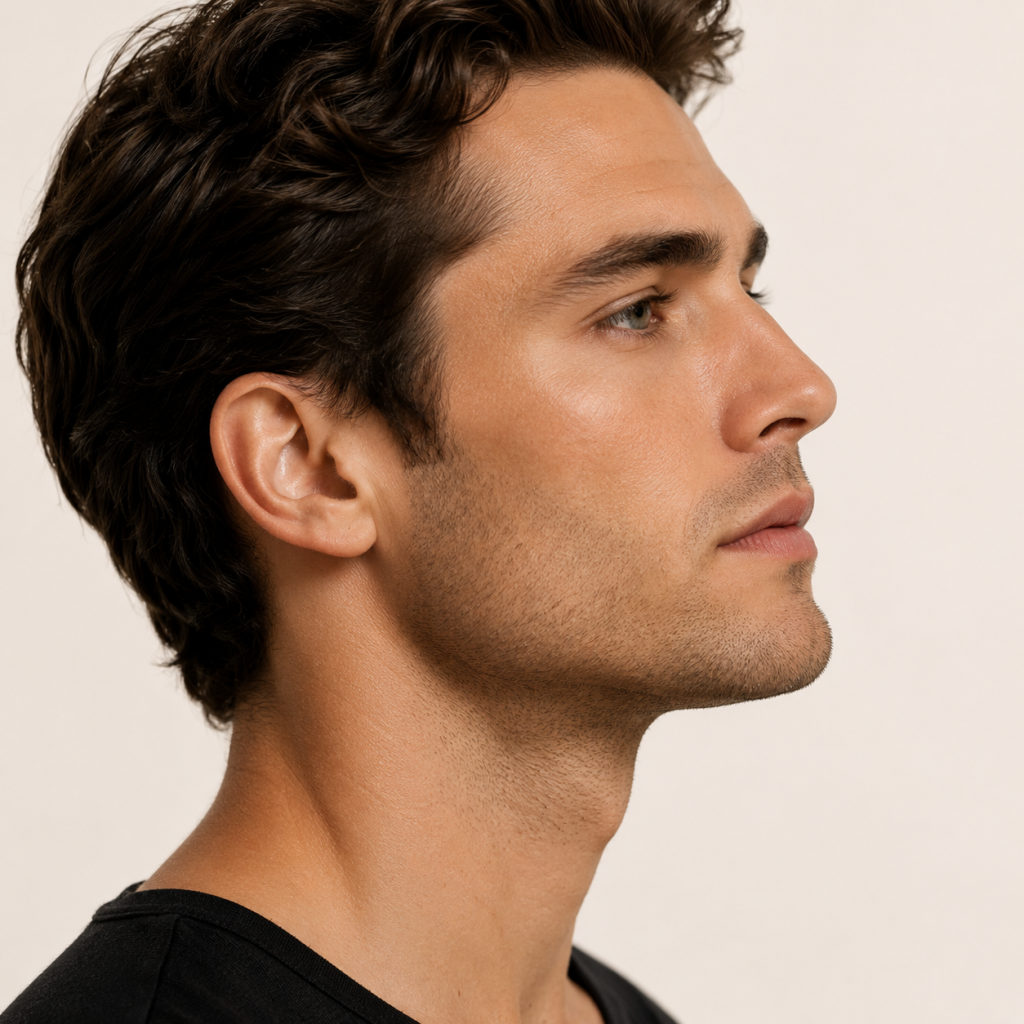
A non-surgical rhinoplasty, often referred to as, nose filler, has become an increasingly popular way to improve the appearance of the nose without surgery. It can help refine the profile, smooth small bumps, lift the nasal tip, and create better facial balance using carefully placed dermal filler.
However, one of the most common questions people ask is: I want natural-looking nose filler. Who should I see?
The answer is simple: the nose is one of the most technically challenging and high-risk areas of the face to treat, so choosing an experienced medical practitioner is essential.
A non-surgical rhinoplasty uses carefully placed dermal filler to alter the shape and profile of the nose without surgery. Unlike surgical rhinoplasty, no bone or cartilage is removed. Instead, filler is strategically injected to improve facial proportions and camouflage certain irregularities.
The aim is subtle enhancement rather than dramatic change, creating a nose that looks balanced and harmonious with the rest of the face.
When asking, I want natural-looking nose filler. Who should I see? Experience should be one of the most important considerations.
The nose has a complex blood supply and contains blood vessels that are closely connected to the eyes. For this reason, non-surgical rhinoplasty requires an in-depth understanding of facial anatomy, advanced injection techniques, and careful patient selection.
According to Dr Ayad Harb, Medical Director at SRGN Clinic:
“The best non-surgical rhinoplasty is the one that nobody notices. The goal isn’t to create a different nose, but to improve balance and harmony while preserving each patient’s natural features.”
Natural-looking results are achieved through careful planning rather than simply adding filler.
Dr Ayad explains:
“Every nose is different. We assess the entire face, not just the nose itself. Small adjustments can often make a significant difference to facial balance without making the treatment obvious.”
The amount of filler used, the injection technique, and understanding how the nose relates to the forehead, lips, and chin all influence the final result.
Non-surgical rhinoplasty can be suitable for individuals who wish to improve the appearance of:
It is important to understand that dermal fillers cannot make the nose smaller or correct significant structural concerns. In these situations, surgical rhinoplasty may be the more appropriate option.
Because the nose is considered one of the highest-risk areas for injectable treatments, choosing an experienced medical practitioner is particularly important.
Dr Ayad Harb has developed his own 3-Point Rhino Technique, a refined approach to non-surgical rhinoplasty that focuses on achieving natural facial harmony while minimising the amount of filler required. Every treatment begins with a detailed assessment to determine whether a patient is suitable and whether non-surgical rhinoplasty is the right option for their concerns.
Understanding, I want natural-looking nose filler. Who should I see? is about more than finding someone who offers the treatment. It is about choosing a practitioner with extensive experience in facial anatomy, aesthetic balance, and non-surgical rhinoplasty.
When performed with precision and careful planning, nose filler can create subtle, elegant improvements that complement the rest of the face. The aim should always be to enhance your natural features—not to create a nose that looks obviously treated.
Many surgeons and aesthetic practitioners use clinical photography and facial assessment software to help demonstrate potential outcomes before treatment. While these simulations can provide a useful guide, they are not a guarantee of the final result. Whether considering surgical or non-surgical rhinoplasty, a detailed consultation allows the practitioner to discuss what is realistically achievable based on your facial anatomy.
The most appropriate treatment depends on what you dislike about your nose. Minor concerns, such as a small bump, a drooping tip, or slight asymmetry, may be improved with a non-surgical rhinoplasty using dermal fillers. More significant structural changes, including reducing the size of the nose or correcting breathing problems, generally require surgical rhinoplasty. An assessment by an experienced practitioner can help determine the best option.
When performed well, nose filler should not be obvious. The aim of a non-surgical rhinoplasty is to improve facial balance with subtle enhancements that look natural rather than overtreated. The amount of filler used, careful placement, and an understanding of facial proportions all contribute to the final result. Most people notice that the nose looks more balanced, without necessarily recognising that a treatment has been performed.
