Posted on 2 September 2026
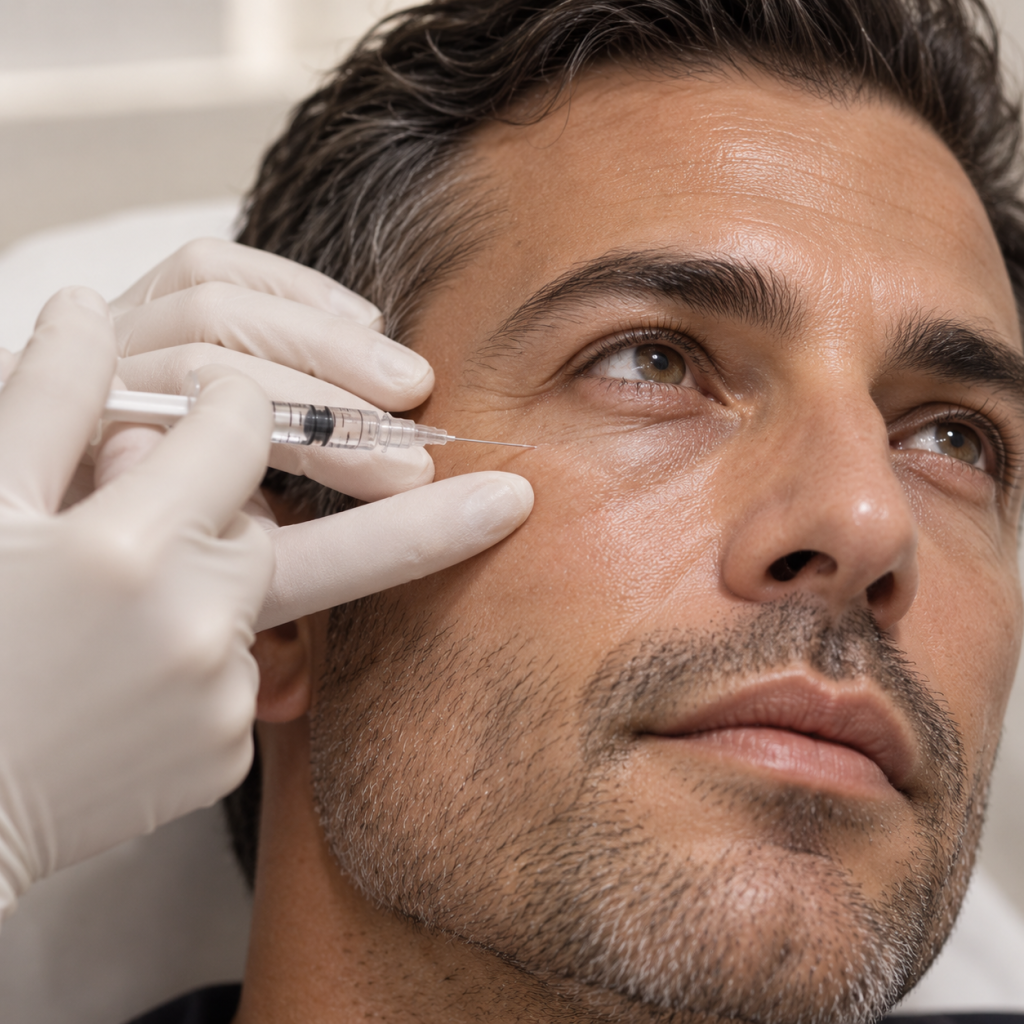
The under-eye area has always been one of the most challenging parts of the face to treat. The skin is exceptionally thin, changes in volume can create visible shadows, and even a small amount of swelling can alter the way the whole eye area looks. For years, tear-trough filler became one of the most familiar non-surgical solutions for under-eye hollows. In 2026, however, the conversation is changing. Aesthetic practitioners are increasingly interested in regenerative treatments that improve the quality of the skin itself, rather than automatically adding volume beneath it. Polynucleotides have become central to that shift.
For Mo Harb, this does not mean dermal filler has suddenly become an outdated treatment. It means practitioners are becoming more selective about what the under-eye actually needs. “A hollow and poor-quality skin are two different problems” is the principle behind this change in approach. Treating them as though they are the same can lead to disappointing results.
Dermal filler still has an important role in aesthetic medicine.
When someone has a true structural hollow beneath the eye, and the anatomy is suitable, carefully placed filler can reduce the shadow between the lower eyelid and cheek. Research continues to show high levels of patient satisfaction with appropriately performed tear-trough treatment. But the eye area presents particular challenges. Because the tissues are thin and delicate, swelling and contour changes can be more noticeable here than elsewhere on the face. Research has documented complications including persistent or delayed swelling, contour irregularities and a blue-grey appearance sometimes associated with superficially placed filler.
Filler can also remain around the eyes considerably longer than patients may expect. For Mo Harb, these considerations make patient selection particularly important. Someone presenting with thin, crepey under-eye skin, fine lines or poor elasticity does not necessarily need additional volume.
Sometimes, improving the skin itself makes considerably more sense.
Polynucleotides do not behave like traditional dermal fillers. They are not primarily designed to create projection, fill a deep hollow or change facial proportions. Instead, they are used as a regenerative injectable treatment focused on skin quality.
This distinction is particularly relevant around the eyes. A 2026 review directly comparing hyaluronic acid fillers with polynucleotides for under-eye rejuvenation concluded that filler remains stronger for **structural correction**, while polynucleotides showed benefits for qualities including elasticity, hydration and fine lines. The authors also stressed that further high-quality comparative research is still needed.
This reflects the way Mo Harb approaches the area. Rather than asking simply, “How do we fill the tear trough?”, the better question can sometimes be, “What is actually making this eye area look tired?” The answer might be volume loss. But it may equally be thinning skin, dehydration, fine creasing or a combination of several factors.
One of the biggest changes in contemporary aesthetics is the move away from treating every sign of ageing with additional volume. The under-eye is a good example. A patient may describe their concern as “dark circles”, but shadowing can be influenced by skin thickness, pigmentation, underlying blood vessels, facial anatomy and volume loss. Another patient might dislike what they call eye bags when the real concern is puffiness or laxity rather than a hollow. Filler cannot correct all of these problems.
Polynucleotides offer a different approach because the objective is not to fill the space beneath the eye. Treatment is aimed at supporting gradual improvements in the quality and condition of the skin. For Mo, this can be particularly useful when the under-eye looks creased, dehydrated or fragile but does not necessarily require more volume.
A wider change is also taking place across aesthetic medicine. The exaggerated-volume aesthetic that characterised parts of the previous decade has increasingly given way to a preference for subtler, less detectable treatment. Current beauty reporting in 2026 reflects growing interest in regenerative aesthetics and treatments focused on collagen, hydration and skin health rather than simply adding volume.
The eye area is particularly suited to this philosophy because even small changes can be highly visible. Mo Harb’s approach is therefore not about attempting to make the under-eye completely smooth. Natural eye-area skin has movement, texture and fine lines. The aim is to help it look healthier and less tired without making it obvious that a procedure has been performed.
This is an important distinction. If someone has a pronounced anatomical hollow caused by volume deficiency, polynucleotides will not physically replace that missing volume in the way a dermal filler can. The 2026 clinical review comparing both treatments makes the same distinction: hyaluronic acid filler remains more effective where structural correction is the primary objective.
Mo Harb therefore sees polynucleotides and filler as treatments for **different problems**, rather than competing products where one must always replace the other. In some patients, polynucleotides may be the more appropriate treatment. In others, carefully selected filler may still be the correct option. And in certain cases, neither treatment may be suitable. Good aesthetic medicine begins with the anatomy, not with the treatment menu.
The growing interest in polynucleotides centres largely around skin quality. Current evidence suggests potential improvements in hydration, elasticity and fine lines within the periorbital area. Polynucleotides are also being studied for their role in dermal remodelling and tissue repair. These changes are gradual.
A patient should not expect the immediate filling effect associated with dermal filler. Instead, treatment tends to form part of a course, with improvements developing as the skin responds over time. For Mo, that slower process is not necessarily a disadvantage. Where the aim is natural rejuvenation, gradual changes can mean the eye area simply begins to look fresher rather than suddenly looking different.
Another factor influencing treatment choice is an individual’s tendency to retain fluid around the eyes. Late-onset swelling following facial filler has been described in the medical literature, sometimes developing months or even years after injection. Factors including lymphatic flow, filler characteristics, placement and individual susceptibility may all contribute. This does not mean that everyone who has tear-trough filler will develop swelling. A large meta-analysis found high overall patient satisfaction and relatively low rates of significant complications.
It does mean, however, that practitioners should carefully assess whether someone already has puffiness, malar oedema or other anatomical characteristics that could make filler a less suitable choice. For Mo, this is another reason why the consultation matters more than following a treatment trend.
Previous filler does not automatically prevent someone from having a different form of under-eye treatment. However, it is important to understand what is already present beneath the skin before adding something else. Filler around the eye can sometimes persist for longer than originally anticipated, and previous treatment should therefore form part of the assessment.
If there is unexplained swelling, contour change or suspected residual filler, this may need to be assessed before deciding whether polynucleotides or any further injectable treatment is appropriate. Simply layering one procedure over another without understanding the existing anatomy is rarely the best approach.
Why Aesthetic Doctors Are Swapping Traditional Eye Filler for Polynucleotides in 2026 is really part of a wider change in aesthetic medicine. Practitioners such as Mo are increasingly distinguishing between volume problems and skin-quality problems rather than treating every tired-looking eye with filler. Polynucleotides offer an option for patients whose concerns include thin skin, fine lines, reduced elasticity or dehydration, without being designed to significantly alter facial volume.
Traditional tear-trough filler has not disappeared. In the right patient, it remains an established and effective treatment for genuine structural hollowing. What has changed is the assumption that a hollow-looking or ageing under-eye automatically needs filling. In 2026, the more sophisticated approach is often to ask what the tissue actually needs first. Sometimes that is structural support. Sometimes it is better skin. And increasingly, understanding the difference is becoming the foundation of natural-looking under-eye rejuvenation.
In 2026, aesthetic medicine is increasingly focused on regenerative treatments and improving skin quality rather than simply adding volume. Polynucleotides, skin boosters, RF microneedling and advanced laser treatments are among the approaches attracting particular interest. The best treatment still depends on the concern being addressed, whether that is hydration, pigmentation, skin laxity, texture or volume loss.
Neither is universally better because they treat different problems. Tear trough filler is generally more appropriate when there is genuine structural hollowing and volume loss beneath the eyes. Polynucleotides are more focused on improving skin quality, including hydration, elasticity and fine lines. A 2026 clinical review concluded that filler remains stronger for structural correction, while polynucleotides may be more appropriate when the main concern is the condition of the under-eye skin.
Polynucleotides and dermal fillers have different purposes, so one is not automatically better than the other. Fillers are primarily used to restore volume and structural support, whereas polynucleotides are designed to improve skin quality gradually. For thin, crepey or dehydrated skin, polynucleotides may be more appropriate; for genuine volume loss, filler may provide a more effective correction. The right choice depends on facial anatomy, skin quality and the result being targeted.
