

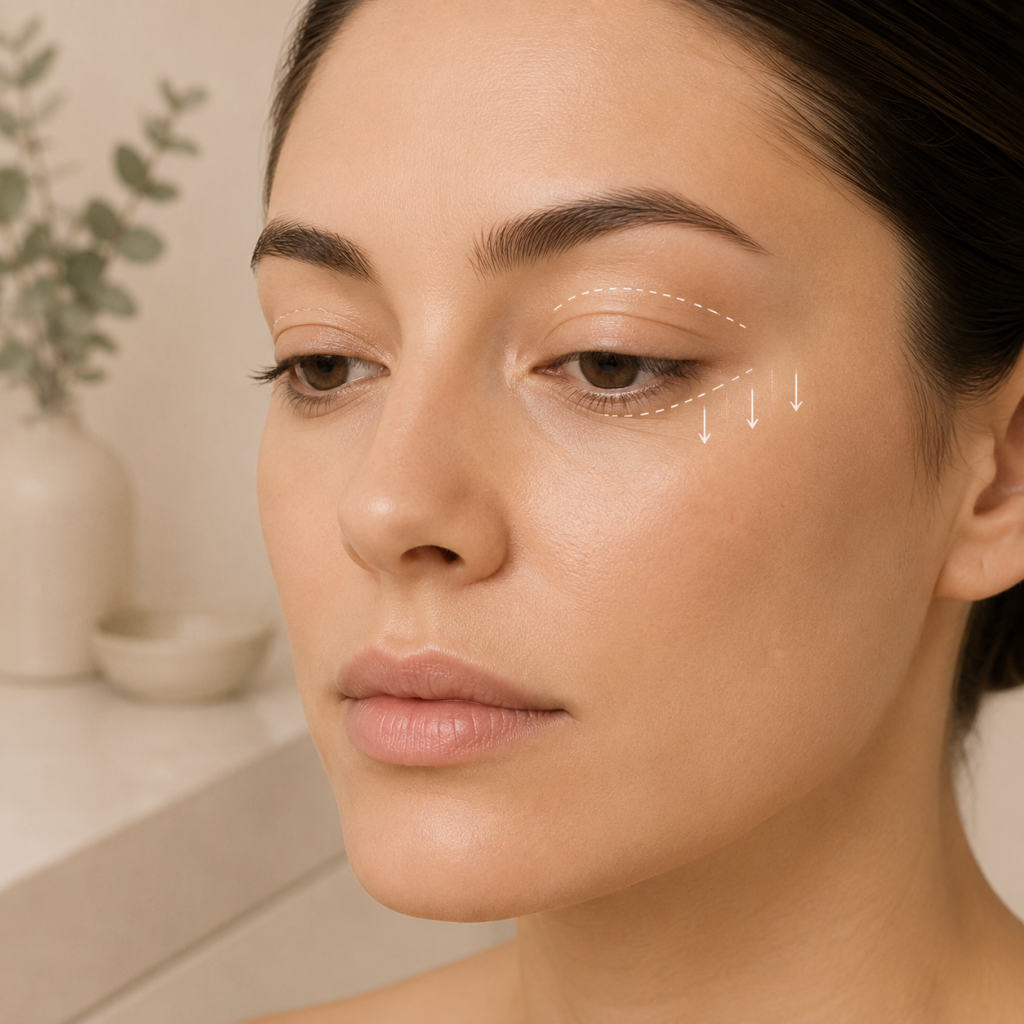
Heavy eyelids are one of the most common concerns people notice as they age. Many describe looking permanently tired, finding eye make-up more difficult to apply, or feeling that their eyes appear smaller than they used to. This often leads to the question: why do my eyelids look heavy?
While ageing is a common cause, heavy eyelids can also be influenced by genetics, skin quality, and changes to the tissues surrounding the eyes. Understanding the underlying cause is the first step in identifying the most appropriate treatment.
The upper eyelids contain some of the thinnest skin on the body. As collagen and elastin naturally decline with age, this delicate skin gradually loses its elasticity.
Over time, excess skin may begin to fold over the natural eyelid crease, creating a hooded appearance. In some people, this is purely age-related, while others inherit naturally heavier eyelids from their family.
Dr Ayad Harb, Medical Director at SRGN, explains:
“Many patients think their eyelids suddenly become heavy, but it’s usually a gradual process. Small changes in the skin and supporting tissues accumulate over time until they become noticeable.”
One of the reasons heavy eyelids can be frustrating is that they often make a person appear tired, even when they feel well rested.
As excess skin develops on the upper eyelid, it can cast a shadow over the eyes and reduce the visible eyelid space. This can create the impression of fatigue, sadness, or ageing despite the rest of the face looking relatively youthful.
In more advanced cases, excess skin may even begin to interfere with the upper field of vision.
Both ageing and genetics play an important role.
Some people naturally have hooded eyelids from a young age because of their facial anatomy. Others develop heaviness later in life as collagen production declines and the skin gradually loses its ability to support itself.
According to Dr Ayad:
“Not every heavy eyelid is caused by ageing. During the consultation we assess the skin, brow position, and facial anatomy to understand why the eyelids appear heavy before recommending treatment.”
Good skincare can improve the quality of the skin and help maintain hydration, but it cannot remove excess eyelid skin.
Similarly, some non-surgical treatments may improve skin quality around the eyes in carefully selected patients, but they cannot recreate the results achieved by removing excess skin.
When the heaviness is caused by loose upper eyelid skin, surgery is often the most predictable and effective solution.
Upper blepharoplasty is a surgical procedure that removes excess skin from the upper eyelids. Depending on the individual’s anatomy, small amounts of underlying tissue may also be adjusted to create a smoother and more refreshed appearance.
The aim is not to change the natural shape of the eyes but to restore a more open eyelid while preserving facial expression.
Dr Ayad explains:
“A successful upper blepharoplasty should make patients look fresher rather than different. The goal is to remove the heaviness while maintaining the natural character of the eyes.”
Upper blepharoplasty is often suitable for people who have:
A consultation is essential to determine whether surgery is appropriate and whether the heaviness is caused by the eyelids themselves or by changes in brow position.
The eyelids are among the most delicate areas of the face, making experience particularly important.
When researching treatment for heavy eyelids, patients should look for a surgeon who regularly performs upper blepharoplasty, has a thorough understanding of facial anatomy, and focuses on natural-looking results.
Understanding why do my eyelids look heavy begins with identifying the underlying cause. While skincare products and non-surgical treatments may improve skin quality, they cannot remove excess eyelid skin.
For patients whose heaviness is caused by loose upper eyelid skin, upper blepharoplasty offers a long-lasting solution. By carefully removing excess skin while preserving the natural appearance of the eyes, the procedure can create a brighter, more refreshed look that still feels completely you.
Heavy eyelids are most commonly caused by excess upper eyelid skin, the natural ageing process, or inherited facial anatomy. As collagen and elastin decline over time, the skin around the eyes loses elasticity and can begin to fold over the eyelid crease. In some cases, heavy eyelids may also be associated with changes in brow position or certain medical conditions, so a professional assessment is recommended if the symptoms develop suddenly or affect vision.
The most appropriate treatment depends on what is causing the heaviness. If the concern is related to ageing and excess skin, skincare products may improve skin quality but cannot remove loose eyelid skin. When significant skin laxity is present, upper blepharoplasty is often the most effective treatment because it addresses the underlying cause by removing excess skin and restoring a more open, refreshed appearance.
Heavy-looking eyelids are usually the result of genetics, ageing, or a combination of both. As the skin loses collagen and elasticity, it can begin to sag over the upper eyelid, creating a hooded appearance that may make the eyes look smaller or more tired. In some people, changes in brow position can also contribute to the appearance of heavy eyelids. A consultation with an experienced blepharoplasty surgeon can determine the underlying cause and the most appropriate treatment.