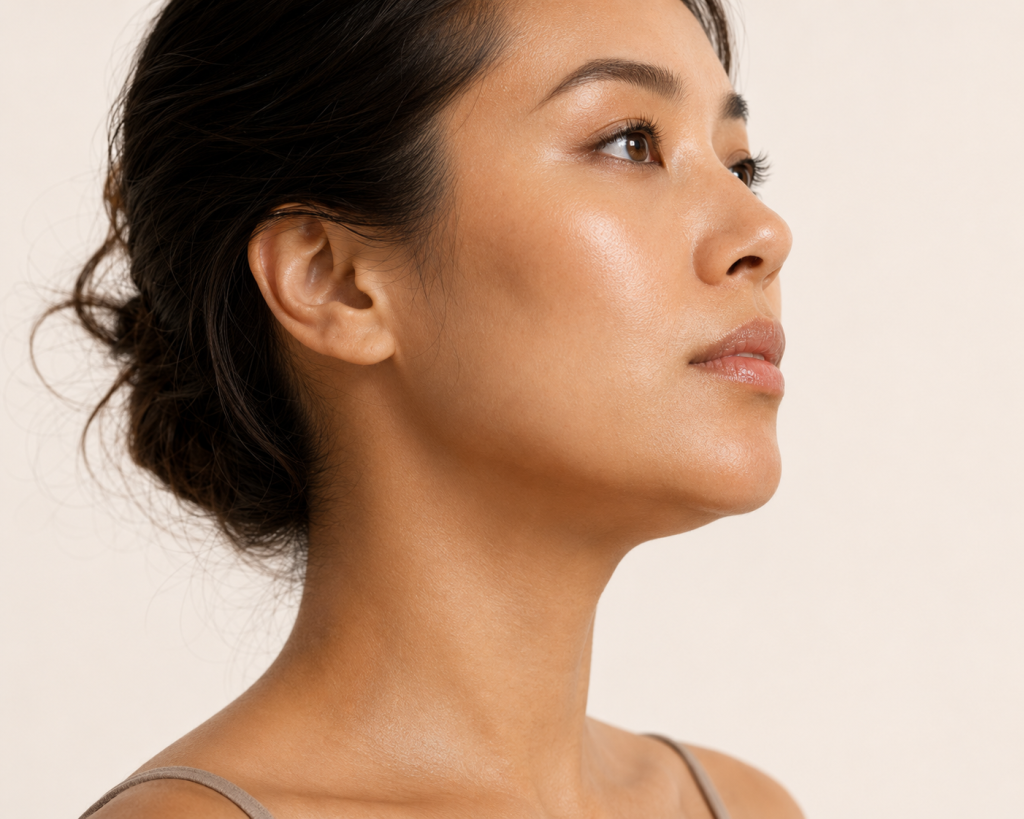
Many people associate ageing with wrinkles, but they are only one part of the picture. It is not unusual to look in the mirror and feel that your face appears older, despite having relatively smooth skin. This often leads to the question: why does my face look older even though I have no wrinkles?
The answer usually lies beneath the surface. Skin quality, collagen loss, changes in facial volume, and reduced elasticity can all contribute to an older appearance long before deep lines develop.
Facial ageing is a gradual process that affects every layer of the face. While wrinkles become more noticeable over time, the earliest changes often involve declining collagen, reduced hydration, slower cell turnover, and loss of skin elasticity.
These changes can leave the complexion looking dull, the skin less firm, and facial contours softer. As a result, the face may appear tired or older, even when wrinkles are minimal.
When asking, why does my face look older even though I have no wrinkles, the skin’s overall quality is often the biggest clue.
As collagen production naturally declines, the skin becomes thinner and less resilient. Light reflects differently from dehydrated or uneven skin, making the complexion appear less radiant. At the same time, subtle volume loss in areas such as the cheeks and temples can reduce facial support without creating obvious wrinkles.
These early structural changes often contribute more to an aged appearance than fine lines alone.
Healthy skin reflects light evenly and appears smooth, hydrated, and vibrant. As we age, reduced collagen, elastin, and hyaluronic acid levels affect the skin’s texture and elasticity.
The result may be enlarged pores, mild skin laxity, uneven tone, and a loss of natural luminosity. These changes can make the face look older, even if expression lines remain relatively subtle.
Modern aesthetic treatments increasingly focus on improving skin quality instead of simply treating wrinkles.
NCTF is designed to revitalise the skin by delivering hyaluronic acid together with vitamins, amino acids, antioxidants, and co-factors that support overall skin health. It is often chosen to improve hydration, brightness, and skin vitality.
For patients whose skin feels dehydrated or has lost its natural glow, Hydromax helps restore moisture deep within the skin. By improving hydration from within, it can enhance skin smoothness, elasticity, and radiance, creating a fresher and healthier-looking complexion.
For patients looking to improve skin regeneration, Rejuran works by supporting the skin’s natural repair processes. Rather than adding volume, it helps improve skin resilience, texture, and overall quality over time.
Collagen loss is one of the main reasons the face begins to look older before wrinkles appear.
Radiesse is a collagen-stimulating injectable that provides structural support while encouraging the body to produce new collagen. This can help improve skin firmness and restore a more youthful appearance without creating an overfilled look.
Similarly, SylfirmX uses radiofrequency microneedling to stimulate collagen and elastin production. By strengthening the deeper layers of the skin, it can improve texture, elasticity, and mild skin laxity, helping the face appear fresher and more defined.
Understanding, why does my face look older even though I have no wrinkles, highlights an important shift in facial rejuvenation. Ageing is no longer viewed simply as the appearance of lines, but as a gradual decline in skin quality, collagen, and facial support.
By improving hydration, stimulating collagen, and strengthening the skin itself, treatments such as NCTF, Hydromax, Rejuran, Radiesse, and SylfirmX can help restore a healthier, more radiant appearance. Rather than changing facial features, these treatments focus on enhancing the skin’s natural structure, allowing patients to look refreshed while still looking like themselves.
While the ageing process cannot be stopped, it can be slowed by protecting and supporting the skin. Daily sun protection, a healthy lifestyle, and a consistent skincare routine all play an important role. In-clinic treatments that improve hydration, stimulate collagen production, and enhance skin quality can also help maintain a fresher, healthier appearance without changing your natural facial features.
There is no specific age at which everyone begins to look older, as genetics, lifestyle, and sun exposure all influence the ageing process. However, many people notice more visible changes from their late thirties to early forties, when collagen production declines, skin elasticity reduces, and facial volume gradually changes. These subtle structural changes often become more noticeable before deep wrinkles develop.
Several nutritional deficiencies can affect skin health and contribute to an older appearance. Low levels of vitamin C may impair collagen production, while deficiencies in vitamin D, vitamin B12, iron, and essential fatty acids can affect skin repair, hydration, and overall vitality. However, visible ageing is usually caused by a combination of genetics, sun exposure, hormonal changes, and lifestyle factors rather than a single nutrient deficiency alone.
